Skip to content

The Pyramid Model in Washington: Supporting All Children

“Washington State strives to better meet the needs of all learners and families, but we need to develop the infrastructure to support early childhood special education,” says Ariane Gauvreau (PhD ‘15), senior director for professional development and training at the Haring Center.

The state is seeking to do just that. One of the ways they plan to do so is with a new partnership that will redesign a framework called the Pyramid Model to center disability, race and equity.

The Pyramid Model for Supporting Social Emotional Competence in Infants and Young Children is a national framework that promotes children’s social and emotional development and prevents challenging behavior. Washington State is among those who receive technical assistance support from the National Center for Pyramid Model Innovations (NCPMI), and a state leadership team works to ensure educators statewide use the model to support young children in our state.

“The Pyramid Model provides a foundation that sets children up for success in future learning,” explains Angel Fettig, Haring Center researcher and UW College of Education associate professor. “It promotes strategies to support educators to build relationships with children and families.”

“It also targets social-emotional teaching,” Fettig continues. “We’re teaching kids how to be friends, how to share, how to identify and express emotions appropriately, how to control anger and impulse, and so on. But as the state leadership team continues to lead this effort, we always come back to: ‘What about kids with disabilities? What about race and equity?”

The Haring Center, in collaboration with Cultivate Learning, is leading the redesign of the Pyramid Model to promote inclusion of all children in early learning settings across Washington.

“The Pyramid Model is widely-used, and it is very well-developed,” says Fettig. “The goal of the redesign is to infuse components that are critical to addressing needs in our state.”

Fettig explains that the redesign will center children with disabilities and infuse equity into the strategies promoted throughout the Pyramid Model framework.

“This is an exciting opportunity with so many agencies coming together to develop a system that will enable us to better serve all learners,” says Gauvreau. “We are excited to be working with our colleagues at Cultivate Learning and to partner with both the Office of Superintendent of Public Instruction (OSPI) and the Department of Children, Youth, and Families.”

Ryan Guzman, early childhood special education coordinator at OSPI, says that prioritizing the intersectionality of social-emotional development and embedded inclusionary practices will increase the likelihood of positive outcomes for young children with disabilities, as well as increase access to inclusive settings, improve academic outcomes, and decrease suspension and expulsion rates for young children.

“We are hopeful this collaboration will move us closer to achieving the vision that Washington State has responsive systems partnering with the adults in children’s lives to promote social-emotional health through the Pyramid Model framework, so that all children experience high-quality, inclusive early learning settings,” says Guzman.

The redesign process is already underway. Experts at the Haring Center and Cultivate Learning are working to build up the Pyramid Model to enhance strategies that are effective in supporting young children with disabilities in inclusive settings, as well as racially, ethnically and culturally diverse children and families. This spring, teams are working on developing new curriculum modules to guide this.

“We know that a foundation that targets social-emotional skills and executive functioning skills hard in early childhood leads to better academic outcomes for children,” explains Gauvreau. “The Pyramid Model does a brilliant job with that. Our redesign will emphasize strategies for ensuring that children with disabilities can access this important instruction in meaningful ways, and center racial equity within all content.”

After the curriculum modules are complete, the Haring Center will facilitate Train the Trainer workshops across the state on Pyramid Model practices, in addition to teacher trainings and Practice-Based Coaching later in the year. The goal of these trainings is to ensure leaders across the state are confident in supporting teaching teams as they implement these practices.

“These trainings will address our own implicit biases, how we interpret behavior and how educators can work toward anti-racist practices and classrooms,” says Gauvreau.

The partnership hopes to continue this work into 2022 by facilitating communities of practice throughout the school year for the newly trained Pyramid Model coaches. These would involve regular meetings that provide a community for coaches to receive support, discuss problems of practice, ensure fidelity of implementation and come together with others doing similar work on a regular basis.

“Partnering on this redesign to focus more on equity and inclusion means that across the state, coaches and teachers will be better prepared to understand their own biases and support children’s behavior through preventative and proactive ways,” says Dawn Williams, director of professional learning and coaching at Cultivate Learning.

“Our goal is for educators to not have to dig further for strategies to support children with disabilities,” adds Fettig. “With the redesign, it will be easier for them to use the Pyramid Model for all learners.”

Gauvreau explains that this partnership is a key piece in Washington State’s larger initiative to foster inclusion across all systems that serve children, families and communities, and will lead to lasting change.

“The sustainability of this model is really exciting,” says Gauvreau. “Building the capacity and the sustainable systems to support this work is crucial, and we are so excited to be a part of this work.”

In addition to the long-term impact, Fettig adds that the scope of this project is far-reaching. “We hope for this redesigned model to be accessible to all early childhood programs across Washington state,” she explains.

“Our goal is to promote inclusion of diverse learners and improve outcomes for young children, specifically those with disabilities,” Fettig says.

Teaching Through a Pandemic

Plexiglass barriers. A classroom with two students. Physical therapy through a computer screen. This is just another day at the Haring Center’s Experimental Education Unit (EEU), which is offering a hybrid learning model this school year.

Preschool and Kindergarten students come to the EEU two days a week, either Mondays and Tuesdays or Thursdays and Fridays. Learners who qualify for the Early Childhood Education and Assistance Program can attend all four in-person instruction days. All Preschool and Kindergarten families have the ongoing option to learn exclusively remotely, which some have elected to do.

Younger students in the Infant and Toddler Program learn entirely remotely. “We believe it would be extremely difficult for children under the age of three to maintain physical distancing in a group setting,” explains Chris Matsumoto, EEU principal and Haring Center assistant director.

The EEU has been able to provide remote students with devices as one measure to address the educational inequities which have been intensified by the pandemic.

Of course, school at the EEU is more than just the classroom. Many students receive related services, such as physical, occupational or speech-language therapy.

As with classroom learning, there are no in-person related services for the birth-to-three age group. Whitney Gregory, a physical therapist at the EEU, describes how she uses an example baby doll to teach positioning to parents during one-on-one virtual sessions.

Gregory sees her preschool age group individually at recess or during gym time. “Preschoolers can participate and follow directions, and they want to play games,” she explains. “I craft creative ways to get them to practice things like balancing on one foot — we do animal yoga, all sorts of things.”

Families who have elected to learn entirely remotely also receive their related services virtually, in one-on-one sessions.

“Things are obviously different from years past,” says LaShondra Hayes, an instructional assistant in a preschool classroom at the EEU. “Some of these children don’t have siblings so have gone months without interacting with other kids.”

Taylor Johnson, an EEU preschool head teacher, agrees that families are facing different difficulties. “Some families have more than one child at home, some have only one child at home. Some have a child balancing three different outside therapies as well as school, some have a child going to a school setting outside of the EEU, some have their child at home with them all day every day while both parents are trying to work,” says Johnson. “Customizing things for each family has been an added challenge, but will turn into a long-term benefit of this experience.”

Johnson also explains that EEU teachers are working to ensure activities are not a burden on families, both in terms of time and materials.

“We’re working toward ensuring equity through access, and also instructional quality,” says Johnson. “With the hybrid model, we are thinking about how we provide instruction equally to students attending in-person and students who are one hundred percent remote, in addition to making sure we don’t repeat material for kids coming four days a week.”

Gregory notes that the biggest challenge as a physical therapist this year is the limited time with children.

“The high degree of repetition is what really makes a difference with children. We could do that last year, for example practicing stairs every day when a child gets off the bus,” she says. “Only being able to see them once a week this year makes it very difficult.”

Gregory also explains that many of the goals she works on with students involve group-based practice, which is hard to find this year due to much smaller class sizes. “In a normal world, we might practice balance while a crowd is around a student during a game, or use sports at recess. But it’s hard to set up a soccer or kickball game when there are only three kids.”

“As a physical therapist, I’m usually very close to children as I help them climb or go up and down stairs,” Gregory continues. “It’s difficult to work on those skills without being physically close.”

Challenges EEU staff face this year include not only those during remote and in-person school, but also those from the outside world. For example, many teachers’ own family schedules have changed.

“I have to pick up my son much earlier than in past years,” says Hayes. “And that means I no longer have time to debrief with the other teachers at the end of the day because I have to rush out to pick him up.”

Despite everything, staff at the EEU point out silver linings and valuable lessons learned.

“A phenomenal difference is how we can really focus on establishing interpersonal relationships with our kids thanks to the smaller class sizes,” says Hayes. “We don’t get the same bond when we have a class of sixteen students.”

Johnson describes how this year has induced much stronger collaboration with families.

“Families are our partners, and this year their role in the partnership is much bigger than before,” she says. “It’s been really rewarding to hear families say how excited they are to be a part of the teaching. We just did a unit on taking care of clothes, and families have expressed how meaningful it’s been to engage with the curriculum, whether that is washing a piece of clothing with their child or using a snack talk we’ve sent home at dinner to talk about clothes.”

Gregory explains that she has been able to interact with parents and caregivers much more than in previous years, and that the carry-over of physical therapy practice to home is much higher as a result.

“It’s been great to get a peek into what life is like at home,” she says. “I can see how a kid climbs onto their couch, while talking with their parents.”

“Another rejuvenating thing for our team is hearing how much our students are excited to be a part of the classroom community,” says Johnson. “We do a daily check-in at the start and end of each day in our classroom. The last three weeks, we’ve always had kids who say they’re upset that school is over. It’s been really lovely to see the honesty with which they’re sharing their feelings and emotions.”

According to Hayes, the gratitude shown by families given all they are going through pushes her to continue finding ways to support children at the EEU.

“Seeing a smile on a kid’s face after they had a complete disaster at snack time — sometimes we might want to give up, but we keep going,” she says. “I’ll be back tomorrow, because that smile right there says a lot.”

New Research Offers Practical Principles to Guide Behavior Analyst Ethical Code

“Imagine you’re a Board Certified Behavior Analyst (BCBA), and there is a child who you are uniquely qualified to help, but you have another relationship with the family as they go to your church,” says Nancy Rosenberg, Haring Center researcher and associate teaching professor at the University of Washington College of Education (CoE). “Do you take on that child as a client?”

Rosenberg explains that according to the Behavior Analyst Certification Board (BACB) Professional and Ethical Compliance Code for Behavior Analysts (“The Code”), BCBAs should avoid having multiple relationships with clients. However, she says that often reality is much more complex.

Rosenberg teamed up with three CoE colleagues to explore how BCBAs can navigate ethical dilemmas like this one. The workgroup’s inquiry builds on research previously done by Rosenberg and Ilene Schwartz, director of the Haring Center, around ethical decision-making in the field of Behavior Analysis.

“We all want a way to help Applied Behavior Analysis (ABA) students and colleagues address ethical dilemmas in a way that is true to the field and also true to their practice and dilemmas faced by families,” says Schwartz.

Elizabeth Kelly, Haring Center fellow and doctoral candidate at the CoE studying special education, explains that using a rule-based approach to applying the Code to every decision is impractical and ineffective.

The workgroup decided to examine other fields’ ethical codes and develop principles to accompany the BACB Code for the ABA program at the CoE. This research turned into a paper published this autumn in Behavior Analysis in Practice, “When rules are not enough: developing principles to guide ethical conduct.”

“We looked into some of the ways other fields were thinking about ethical codes and principles,” says Katie Greeny, also a CoE doctoral student studying special education. “We examined the American Occupational Therapy Association, the American Psychological Association, six allied professional organizations in total to see how they approached ethics.”

“Every other field’s code has principles to accompany it,” says Kelly.

The workgroup then conducted a broad literature review around ethical code development and merged two models of ethical code and principle development into a single process. Following surveys and feedback from other BCBAs, the researchers selected five principles to guide the Code for the CoE’s ABA program.

The final principles — beneficence, inclusion, professional excellence, self-determination and social justice — now feature on the CoE’s ABA program website and are part of the curriculum for the program’s Masters students.

“The principle of beneficence is where we have the responsibility to engage in practices that maximize our client’s well-being while avoiding those that cause harm,” says Rosenberg. “As BCBAs, we prioritize outcomes for the most vulnerable clients.”

She explains how this principle can help a BCBA manage the situation of multiple relationships described earlier. “You could decide that what is going to help this client the most is to take them on, while arranging safeguards to protect from potential harm of those multiple relationships,” Rosenberg says.

According to the workgroup, ethics in the field of ABA has traditionally been dominated by one worldview in which there is always a right and wrong decision. The researchers seek to bring focus to a more contextual worldview and ensure the field listens to a new generation of practitioners and consumers.

“We got involved in this work because we are committed to ensuring ABA consumers receive services that positively impact the quality of their lives,” says Schwartz. “In order to ensure that, we have to get into these hard questions, whether they’re questions of ethics, or questions of culture, diversity and equity. We are learning we need to explore what it means to practice ABA in a humane and equitable way.”

The recent research paper also discusses how ethical principles allow practitioners to communicate the field’s ideals to those on the outside.

The BACB is currently preparing a revision of the Code. The workgroup hopes that this paper will influence the new version, and that the BACB will decide to include accompanying ethical principles.

“We do not want to impose our principles on others,” says Rosenberg. “Rather, we laid out a process by which the BACB or other smaller ABA organizations can organically develop their own ethical principles.”

In the meantime, the researchers are continuing their inquiry in a variety of ways. Greeny is completing a research and inquiry project that surveyed BCBAs around ethical dilemmas faced in practice. The group is also finalizing a textbook chapter on providing ethical services to individuals with autism spectrum disorder.

“All of our projects combine together to slowly but surely push the field forward in expanding what ethics means,” says Kelly. “We are always getting one step closer to an ever-moving goal post.”

Inclusion in Online Learning: Professional Development and Training

As online learning rapidly became the ‘new normal’ this year, the Haring Center stepped up to ensure inclusion was at the forefront. The Haring Center’s Framework for Online Support comprises a tiered system, at the base of which is ensuring support for families’ basic needs, and moves up through managing behaviors, developing curricula and monitoring progress to adapt as necessary. Each of the Haring Center’s three teams is working from this framework to promote inclusive online learning through its integrated model of research, training and demonstration.

The Haring Center’s Professional Development and Training Team provides expert training. With the onset of the pandemic, the team’s specialists have been supporting educators and leaders to adapt to online learning in an inclusive manner.

“No educators took ‘Teaching in a Global Pandemic 101’ in their teacher preparation programs,” says Ariane Gauvreau (PhD ‘15), senior director for professional development and training. “Teachers are faced with really big challenges right now, and at the Haring Center we’re working hard to empower them to meet the needs of all learners and families.”

The Haring Center is continuing to provide ongoing support statewide to schools from preschool through high school. This may look like working with administrators to create equitable systems and policies that will ensure all families have access to technologies. It may also look like walking teachers through using a green screen to create more engaging ways of delivering instruction in preschool settings.

The Professional Development and Training Team also developed a three-part webinar series to disseminate best practices for online learning with partners across the state as they begin the 2020-21 academic year.

The first webinar covers the current needs of families and how to build community in online settings. The second dives into planning and assessment during online learning.

“We’re encouraging educators to think about how families can be more involved with assessment,” says Gauvreau. “We have an opportunity to authentically position families as their child’s first teacher and to learn from families in ways we aren’t always able to in face-to-face settings.”

The third webinar explores strategies for virtual home visits and supporting families’ individual needs. Gauvreau explains that teachers can leverage technologies to center child preferences and promote participation.

“We know that the needs of families around children’s behavior and communication have increased, and will continue to increase as school and childcare closures persist. It’s crucial that teachers feel confident in their abilities to provide individualized support to families,” she says.

In addition, the Haring Center offers a selection of online learning opportunities, both live and recorded, covering topics such as supporting parents with challenging behaviors at home and leveraging technologies to support families.

Gauvreau notes that the use of virtual trainings has enabled the Haring Center to reach a broader audience, including providers out-of-state, as well as fostering collaboration across school districts.

“During our first webinar, participants wanted to learn not only about how the Haring Center is doing online learning, but also how colleagues in other districts are doing it,” she says. “It’s exciting to be in this space where we can connect educators and support collaboration across programs.”

Gauvreau believes the pandemic will change the landscape of professional development delivery in the future.

“Delivering professional development online increases access for groups of people who otherwise would not be able to join us at the Haring Center for a face-to-face training,” she says. “We hope this enables us to expand our reach and connect with communities outside Puget Sound and beyond.”

Inclusion in Online Learning: Research

As online learning rapidly became the ‘new normal’ this year, the Haring Center stepped up to ensure inclusion was at the forefront. The Haring Center’s Framework for Online Support comprises a tiered system, at the base of which is ensuring support for families’ basic needs, and moves up through managing behaviors, developing curricula and monitoring progress to adapt as necessary. Each of the Haring Center’s three teams is working from this framework to promote inclusive online learning through its integrated model of research, training and demonstration.

“The pandemic was a full stop for a lot of Haring Center research,” says Kathleen Artman Meeker, Haring Center director of research and associate professor at the University of Washington College of Education (CoE). “Much of our research is applied, so it happens in classrooms, on home visits, in community locations.”

This abrupt stop to the conventional education data collection methods prompted Haring Center researchers to consider how they could use their skills to support online learning.

“Our projects had to think flexibly, be nimble and rise to the moment to do work that would be meaningful in this time instead of a burden on others,” explains Artman Meeker.

‘Listen-and-learn’ style methods took the place of traditional intervention techniques as researchers redesigned their work to be useful in the new normal. In some cases, teachers whose classrooms had previously been observed by Haring Center researchers requested follow-up and support around online learning.

Brand new projects also came to fruition as researchers learned from families and teachers about their experiences with schooling during the pandemic.

Elizabeth Kelly, a doctoral student at the CoE studying special education, was in the middle of completing her dissertation when the pandemic struck. Unable to continue her in-school data collection, Kelly designed an entirely new project, entitled Families’ Experiences with Early Learning and Behavior Supports During COVID-19 School Closures.

“Ideally, this research will reach policymakers and educators to help them understand what difficulties families are facing, especially when they have young children with challenging behaviors expected to engage in daily online learning at home,” says Kelly.

Haring Center researchers have also taken this opportunity to spotlight others with valuable contributions to the field.

“The best ideas coming out of this time are from teachers and families, and researchers can help shine a light on some of these really promising things,” says Artman Meeker.

Additionally, researchers are drawing from existing knowledge and applying it to the current circumstances. Artman Meeker notes that the Haring Center has conducted research on topics such as home-school communication and distanced coaching, and while this information was written from a classroom perspective, it is built on principles that apply broadly.

“We have decades of research about how to build responsive environments, community and relationships, and how to individualize instruction,” she says. “We don’t have decades of research about how to do that online, but we can think together with families and teachers about what carries over.”

Artman Meeker sees plenty of potential in the pandemic, and believes research can play a pivotal role in reaching it. She explains that special education services have been particularly disrupted, and those disruptions disproportionately impact families of color.

“The pandemic is an opportunity for us to think about how we can provide services better, so that we don’t recreate the problems we see right now,” says Artman Meeker.

Kelly adds, “Now is the time for early learning programs and families to authentically partner together and dramatically re-envision what instruction and behavior support look like for young learners.”

Inclusion in Online Learning: the Experimental Education Unit

As online learning rapidly became the ‘new normal’ this year, the Haring Center stepped up to ensure inclusion was at the forefront. The Haring Center’s Framework for Online Support comprises a tiered system, at the base of which is ensuring support for families’ basic needs, and moves up through managing behaviors, developing curricula and monitoring progress to adapt as necessary. Each of the Haring Center’s three teams is working from this framework to promote inclusive online learning through its integrated model of research, training and demonstration.

In mid-March, like many schools, the EEU found itself needing to rapidly pivot from an accustomed in-person teaching model to the unfamiliar territory of virtual instruction.

Now, after a summer spent strategizing based on new knowledge and lessons learned from providing emergency childcare in the spring, EEU staff and families are greeting a new school year.

“We learned this spring there are many things you can’t teach online in preschool,” says Chris Matsumoto, EEU principal and Haring Center assistant director. “This is enhanced when it comes to a student with special needs, and even more when it comes to a student with special needs and limited family resources.”

This month, the EEU welcomed preschoolers and kindergarteners with and without disabilities to school twice a week. Students learn in two distinct groups, with each student attending in-person school either Mondays and Tuesdays or Thursdays and Fridays. This design also means fewer children per classroom, in turn allowing for more space, increased cleaning, and smaller groups for eating and play. There is an ongoing option for all students to elect to learn entirely remotely. The Infant and Toddler Program remains exclusively remote due to the challenges of physical distancing with such a young age group.

Matsumoto explains that EEU teachers will be planning for online learning and in-person learning simultaneously, as a result. He expects teachers to increase planning and resource sharing across classrooms, which will save significant time.

“For example, if a teacher designs an activity and records a video of that activity, we’ll encourage them to share that across teams so all families can have access,” says Matsumoto.

He also notes that the hybrid model inspires teachers to embrace technology to communicate with families.

“Technology has a great additive nature for education,” says Matsumoto.

As new inequities emerge with the addition of remote learning, the EEU is prioritizing families in need for the most in-person instruction time.

“Our students who qualify for the Early Childhood Education and Assistance Program will be able to attend all four in-person instruction days instead of just two,” explains Matsumoto.

Considering family resources for remote learning, the EEU distributed school packs containing art materials to all preschoolers, so teachers can design remote learning activities in which every child can participate. The EEU also received a donation of thirty laptops for families, and has been organizing wireless hotspots to ensure all children can access their remote classrooms. Lastly, staff have been coordinating translations of necessary information into the eleven languages spoken by EEU families this school year.

Matsumoto says the pandemic has shown that the in-person component of early childhood education is truly critical.

“It’s not just about learning to read or write; it’s about helping grow good community members, and that’s very hard to do with exclusively remote learning,” he says. “If we are able to provide in-person instruction safely, we have a responsibility to do so.”

Matsumoto continues, “We have four big things to think about this year: safety, consistency, compassion and equity. Whether we’re talking about in-person or remote learning, if we can retain these in everything we do, it’ll be a good year.”

A More Inclusive Grand Cayman

The Haring Center Continues Laying the Groundwork for Inclusive Programming in Grand Cayman

The Haring Center regularly works with partners, both internationally and domestically, to spread inclusive education. In the fall of 2016, the Center entered into a partnership with the Grand Cayman-based non-profit, Special Needs Foundation Cayman (SNFC). SNFC engaged with the Haring Center to support their mission of increasing access to high quality special education services in Grand Cayman.

To kick off this work, Dr. Jennifer Fung, Haring Center Assistant Director of Research, traveled to Grand Cayman to ascertain the current state of special education services on the island by touring local schools, speaking with educational leaders, and meeting with families of children with special needs. In order for SNFC to have the broadest impact on the quality of services, including inclusive educational experiences, she recommended that the Foundation establish a training team who will then support schools and organizations in Grand Cayman.

The second step of the ongoing partnership occurred this October, when SNFC sent three staff members to the Haring Center for a two-week, hands-on seminar to build the skills and strategies necessary to support the use of best practices in inclusive education back home in the Caribbean.

“Inclusion doesn’t look the same everywhere,” said Dr. Fung. “In addition to observation and training on high leverage classroom practices, we spent time discussing what inclusion would look like in the Cayman Islands, as well as what the SNFC inclusion team will need to do to support schools to build inclusive programs that are successful and sustainable in the unique context of their community.”

“We valued the opportunity to observe good practice and share in the wonderful evidence based intervention resources which we can now share with the Cayman Islands,” said Susie Bodden, SNCF CEO. “The opportunity to work on our framework and terms of reference alongside professionals who had already walked that path aided our progress considerably.”

As part of the next step, the Haring Center will provide ongoing consultation, coaching, and training to SNFC as they continue to build their inclusion team and begin work with their community to adopt inclusive practices. A critical component of this ongoing work will be support to the SNFC team as they work with a local early learning center to build their capacity to successfully include kids of all abilities, and to eventually become a demonstration site for inclusive education. This demonstration site will be a place where education professionals can see inclusion in action in their own community, where inclusive education isn’t currently widely practiced.

“Beliefs and attitudes are the number one barrier to inclusion,” said Dr. Fung. “Part of this can be attributed to the fact that many people have not witnessed inclusion working successfully, like it does in the classrooms at the Haring Center. It will be imporant for the SNFC to have a great example of inclusion, where people can observe these practices in action as part of their training, similar to how we use the EEU classrooms in our professional development here at the Haring Center.”

Haring Center trainers teach education professionals the best practices in inclusive education by utilizing training strategies based on principles of adult learning and the most current research in teacher training. Many of the training strategies are based on research conducted by Haring Center researchers, and are designed to ensure that concepts are not just understood, but are used in classrooms.

“We know that kids can’t benefit from instructional strategies that teachers don’t use,” said Dr. Fung. “So our focus is on creating professional development plans that result in the sustained use of evidence-based practices across a school.”

Dr. Fung will return to Grand Cayman in January of 2019 to continue working with the SNFC. For more information on this project, contact Dr. Jennifer Fung at jschleif@uw.edu, and for more information on Haring Center professional development and training services contact pdutrain@uw.edu.

Exploring Numbers

Tips to Bring Math into the Everyday Lives of Children

Haring Center researcher Dr. Katie Lewis is challenging traditional views about how all children learn mathematics in schools.

“We think about math as something you learn in school,” she said. “Often we think that math involves quick and efficient calculation of an answer and the kids who are faster and can memorize better are more mathematical. What we’ve learned about how students understand mathematics is the memorization view of mathematics is really an artifact of our school system and how it is we teach math and it’s not what being mathematical is.”

Dr. Lewis’ work is in dyscalculia, or math learning disabilities. She works with future special education teachers to identify new ways of understanding math that empower them with novel techniques to make learning mathematics as accessible as possible. She recently discussed strategies teachers can use to embed math into everyday life and help young children build an important foundation that will be helpful for the rest of their lives:

Counting

Young children can benefit from routine opportunities to hear and practice counting.  Young children should have the opportunity to watch and participate in counting objects, in the world or in children’s books.  Kids need repeated practice counting before they understand that the last number counted tells you how many objects there are (count 1, 2, 3, 4, 5, so there are 5 toys). As children begin to understand that number words describe the amount, it is helpful to start counting beyond 20 so that kids can begin to hear the regularities in the counting sequence.  Parents and kids can have fun challenging themselves by skip counting (counting by 2s or 10s). Counting helps unlock their ability to describe their world quantitatively.

Language

Numbers are represented by people in a variety of different ways. For example, the number two can be represented aurally as the word “two,” or written in words (two), symbols (2) or drawings (··). For adults, translating between these different forms is second nature, we are not even conscious that we are doing it.

For kids to develop a basic concept of quantity, they “need opportunities to translate across all of these different representational forms,” she said. “We need to support kids’ understanding this concept.”

Dr. Lewis recommends using tangible objects to help children concretely represent quantity.

“Kids need a lot of experience comparing, combining and separating quantities. You can tell a child that 2+3=5 and 3+2=5 but that is not going to mean anything beyond memorizing.” Having kids explore with actual objects, like jellybeans, enables them to discover relationships between numbers.  If the child has 5 jellybeans and you hide some under a cup they can figure out how many are under the cup based on how many they can still see.  This gives kids practice with decomposing numbers, where they can check their own answer (by counting the number under the cup).

Sharing

Dr. Lewis recommends meal times and other social activities involving sharing as an opportunity to embed math and lay groundwork.

“Kids are well tuned into the idea of fairness, particularly when it comes to something like sharing a doughnut or cookie,” she said. “Kids early experiences with this kind of partitioning and sharing provides the foundation for introducing ideas around fractions and rational numbers.”

Exploration

Finally, Dr. Lewis encourages children and teachers to see math as an exploration. Mathematics is everywhere, you just have to look.  Kids are expert observers.

“Start seeing numbers, shape, and space in everyday life. You can look at a pair of shoes and you can think of that as one pair of shoes, or you can think about counting that as two shoes, or you can count the eyelets that the shoelaces go through,” she said. “There are different ways of quantifying by looking at very simple objects that we see with every day.”

When outside with children, try to find as many triangles and other shapes as possible.

For more information about this topic, email Dr. Katie Lewis at kelewis2@uw.edu

One Step at a Time

Pamela Matamoros, a Honduran Entrepreneur, Visits the Haring Center to Bring Best Practices Home

Pamela Matamoros has walked the halls of the Haring Center for the past four weeks, soaking up everything she can. Back at home, in Honduras, she did not see any inclusive education options, so she decided to take matters into her own hands.
“There are special education laws in Honduras, but they are not practiced,” she said. “So most families don’t have any options for their children.”

Matamoros started her own center, Eduktiva Centro Piscopedagogico, to help children with disabilities and learning differences reach their potential through tutoring, therapies and interventions. She came to Seattle as part of an internship called the Young Leaders of the Americas Initiative (YLAI), a US Department of State sponsored program which sends entrepreneurs from Latin America to the United States to learn innovative practices in their field they can take back home.

“When I heard about Pamela’s story, I knew we had to have her come up here,” said Haring Center Director Ilene Schwartz. “She is someone who shares all of the values, goals and ambitions that make the Haring Center great. It has been truly rewarding to have her here for the past four weeks. We have learned quite a bit from her perspective as we try to grow inclusive education beyond our classrooms, our walls and our country.”

Matamoros knew she wanted to teach as early as college, when she was tutoring her fellow students. Ten years ago, however, she started Eduktiva Centro Piscopedagogico to give hope and results for families with a child with special needs.

“I can remember seeing a young girl with Down syndrome who couldn’t read in third grade,” Matamoros said. “The teachers did not know how to help her learn, so I started tutoring her and now she can read.”

This is a very common case for her, and she often takes on children pro bono because many families cannot afford to send their children to private therapists and tutors. Coming to the Haring Center, Matamoros said she had two goals: gathering more knowledge of inclusive therapies, and transforming her center into a business that can grow to help more children.

As soon as she got to the Haring Center, she said she could not believe she was finally seeing what she had been reading about: inclusive education in action.

“It’s inclusion heaven here. You can read about inclusion in a book and even see places trying to get there, but there are so few opportunities to see it working in everyday life like it is at the Haring Center,” she said.

She started achieving her first goal by picking the brains of as many teachers, administrators and especially therapists as possible. In Honduras, there are not as many specialized therapists so she has had to learn how to become her own center’s physical, occupational and speech therapist.

“It was empowering to see that the techniques I use at my center are what therapists use here,” she said. “Even if I didn’t know the reason why until now.”

After a brief stop in Washington DC with the rest of the young entrepreneurs in this internship program, Matamoros is headed home where she plans to begin growing the business side of her center, starting with developing trainings for local teachers on inclusive education and special education.

She is also excited because YLAI also has a reverse exchange program. She hopes a Haring Center staff member will be able to travel to Honduras to help her conduct training and continue her work of spreading evidence-based inclusive practices.

Training Teachers of Tomorrow

Graduate Student Teachers Share Their Experience at the Haring Center

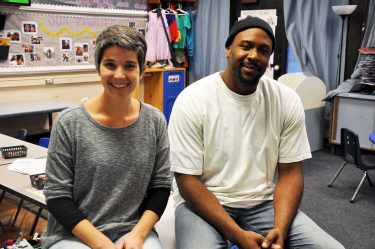
Asking graduate students Savannah Stewart and Anthony Washington to nail down what a typical day is like for them at the UW Haring Center’s school, the Experimental Education Unit (EEU), might be the one thing that have not been asked to do until now.

“You get to do everything and that is a cool opportunity,” said Stewart, who is in her first year of the two-year UW College of Education teaching Master of Education program. “You are able to work with kids in so many different ways: I could be leading small or large groups, doing one-on-one teaching with a student, working on social skills, or teaching art.”

The EEU has five graduate students on staff. These students are taking classes full time at the University of Washington as well as teaching in the EEU kindergarten, preschool and infant toddler program classrooms. Washington, in his second year of the UW graduate program, is used to working as an assistant in special education classrooms. However, his experience at the EEU has been different overall, where he has had the opportunity to observe the practices he’s learning about in his courses put into use by teachers and staff, and to try them out with coaching and guidance from his mentor teacher.

Both Washington and Stewart have experience in the education field before joining the graduate student program. Stewart is in her fourth year at the EEU. She had worked previously as an instructional assistant.

A central tenant to the UW Haring Center’s commitment to inclusion is to recognize and reinforce that everyone has the ability to contribute to their classroom community. At the EEU, this tenant extends beyond each classroom’s students and their families to our teaching staff.

Staff are encouraged to explore better ways to help children learn, and collect data to change practice and monitor progress. Washington is hoping to research how to break down teacher apprehensions to curriculum when teaching specific lessons related to race.

“I’ve written lesson plans that teachers liked but they will sometimes say ‘but I’m a white woman or an Asian American and I don’t think that I can teach this lesson,’” he said. “I want to create a universal language to empower teachers and recognize that your perspective is as valuable as my perspective if we have the same goal.”

Washington plans to continue his education and get his Ph.D. so he can affect education at a curriculum level. Both Washington and Stewart expect to continue their careers in special education, and both are fueled by the passion to increase accessibility of lessons and activities to all children.

“There are so many things that need to be modified and it’s challenging when you have kids that are so different and have varying levels of skill in different areas,” Stewart said. “I’ve been working to do more structured lesson planning and being prepared to present something so that every child can meaningfully connect with it.