Skip to content

Building support for parents and caregivers

Doctoral candidate and Haring Center Scholarship Fellow Yuanchen Kuo is reshaping how researchers and practitioners think about supporting autistic children by starting with their families

Classroom experience, curiosity and a deep conviction that support should never stop at the school door—that is how Yuanchen Kuo, a recent doctoral graduate in Special Education at the University of Washington (UW) College of Education, is building a research career rooted in family partnership.
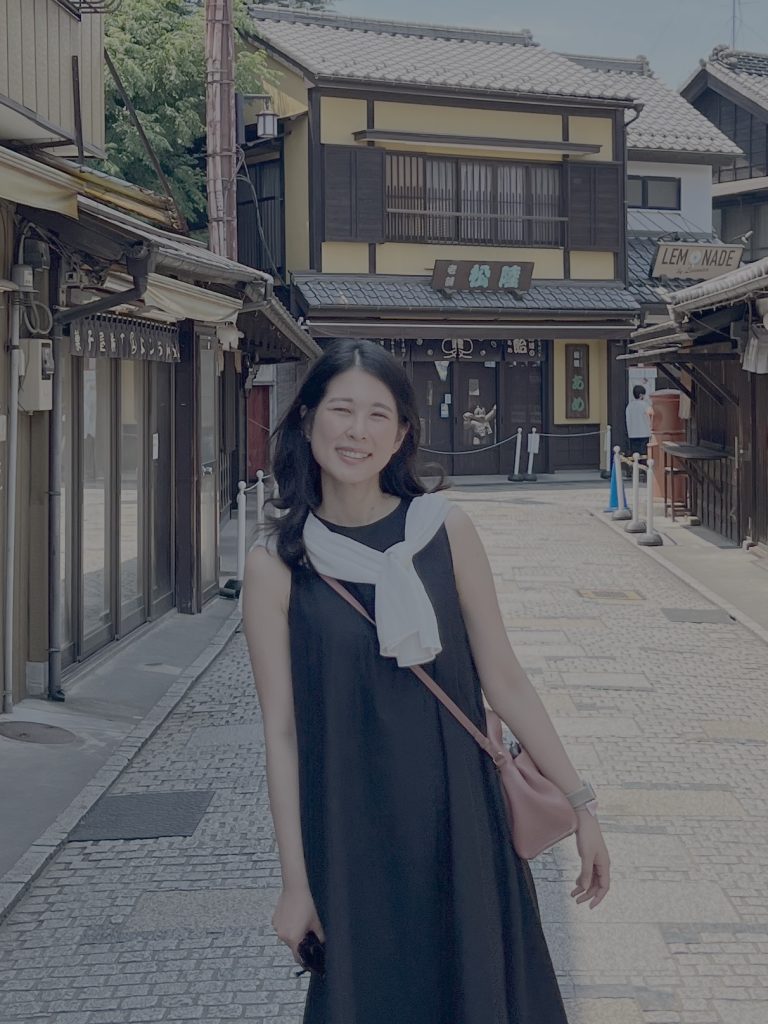
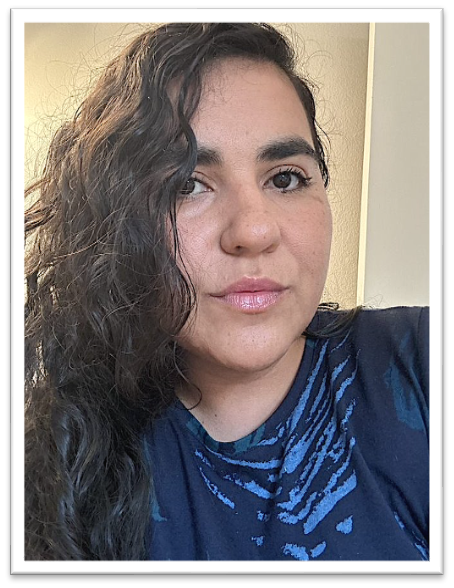
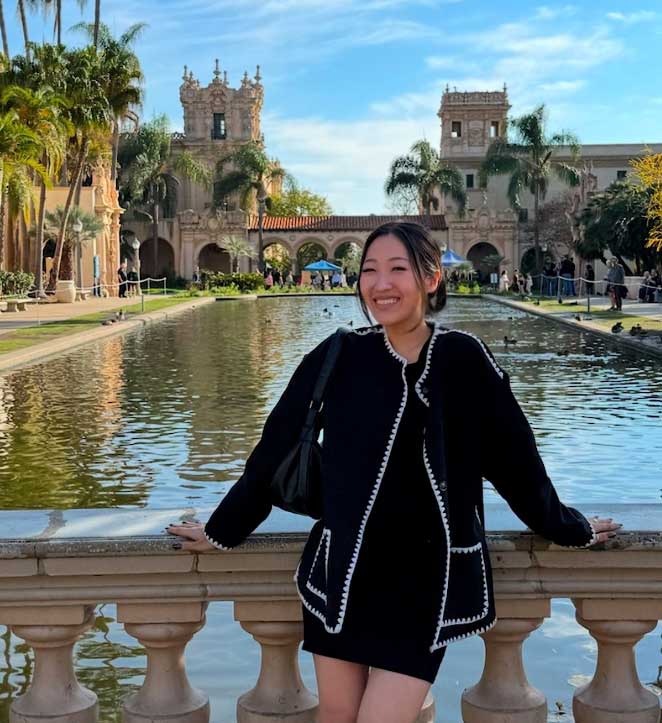
Yuanchen Kuo

As a Haring Center Scholarship Fellow and under the mentorship of Dr. Angel Fettig (Director of Research at the Haring Center and a Professor in Early Childhood Special Education), Kuo has carved out a research focus that focuses on family quality of life.

“Researchers and practitioners often focus a lot on autistic children only,” she says, “and forgot the parent part, or forgot their families. But if we wanted to meaningfully support autistic children, we also need to support their family members, because they spend most of the time with their parents, with their grandparents, not just in schools.”

Kuo’s path to the UW winds through two continents and a formative five years in the classroom. Before pursuing her doctorate, she worked as a special education teacher in Taiwan, helping autistic students build social skills and teaching general education teachers to use evidence-based strategies, from adding visual cues in classrooms to embedding communication boards that gave students the tools to express their needs. Those years in practice sharpened a question she couldn’t let go of: what more could be done?

“I wanted to learn more about the evidence-based strategies,” she says. That drive took her to the University of Texas at Austin, where she studied applied behavioral analysis (ABA), before she arrived at UW to pursue her doctorate and dig deeper into the literature, and into the lives of the families she had come to care about.

At the UW, Kuo’s research has zeroed in on a gap she first noticed as a classroom teacher in Taiwan. When she would meet with parents to discuss their child’s behavior, they would inevitably share more than she had asked. They described the exhaustion of navigating waitlists for ABA services, the uncertainty of individualized education program (IEP) meetings, the weight of daily life with few reliable supports.

“I realized there are a lot of difficulties they face in their life, not just the challenging behaviors,” she says. “And if I wanted to support them, I need to help them with those difficulties as well.”

That insight became the foundation of the family quality of life support program she now runs. Unlike traditional parent training, which teaches caregivers specific behavior management strategies for specific routines, Kuo’s approach begins with a broader assessment of what families actually need. 

Some parents want strategies for managing their child’s behavior at home. Others want to learn how to advocate for their child in IEP meetings, or how to navigate conversations with occupational therapists and speech-language pathologists, or simply where to find reliable services. 

“I encourage them and empower them to let them know you have the right to share what you have observed at home, and what you want your child to learn,” Kuo says. “I can get the bigger picture of the family’s needs.” 

The goal, she emphasizes, is sustainability, not just skills that fade after a program ends, but knowledge and confidence that families carry forward on their own. “I hope that after this parent training, they feel like, ‘I can do more by myself,'” she says.

The Haring Center Scholarship, part of a broader commitment to train the next generation of leaders in special education research, has made that vision concrete. Through the Haring Family Endowed Fellowship, which supports doctoral students’ studies and professional development, Kuo has been able to provide participation stipends to recruit families into her study, purchase materials like visual timers for use at home, and compensate additional caregivers—fathers, grandparents—whose perspectives enrich her research. 

“I’m very, very grateful,” she says. 

The fellowship’s reach extends beyond logistics. It has enabled Kuo to conduct meaningful follow-up interviews with participants, conversations where the real impact of her work comes into view. 

In one such interview, a mother broke down in tears. A full-time caregiver, she had long blamed herself for not being able to fully support her child. After completing Kuo’s program, something had shifted.

“She finally knows she has a right to advocate for her child in school, or in any services,” Kuo recalls. “When she shared that she finally feels like she’s not a bad mom, she can do something for her child, that really touched me.” 

It is the kind of transformation that, according to Kuo’s mentor Dr. Angel Fettig, speaks to something much larger than a single family and to the heart of what Kuo’s scholarship has set out to do.

“Yuanchen has made significant contributions through her work focused on improving family quality of life for families of autistic children receiving behavioral and educational services. Her scholarship emphasizes the importance of understanding family priorities, cultural and contextual factors, and the everyday experiences of caregivers when designing behavior support plans and intervention services. Through this work, she has helped advance more family-centered, collaborative, and socially meaningful approaches to supporting autistic children and their families, aligning closely with the Haring Center’s mission of promoting inclusion, partnership, and equitable support systems. It has been a joy working with Yuanchen and watching her scholarly growth the past 4 years. I am excited for her continued journey to contribute to the field to support children and families,” Dr. Fettig says.

Indeed, as she looks ahead, Kuo wants to turn her lens toward the practitioners themselves, the teachers and service providers who work alongside families every day. 

“I’m not the only one who supports the parents,” she says. “I want to know more about the practitioner’s thoughts and perspectives, what barriers they face, and what support they need.” 

Her goal is to eventually train practitioners to better support families from the inside out. For those who want to understand why her work matters, Kuo says, “Building a partnership with families is really powerful. Share that you care. Share your empathy. Even just listening, that can help a lot.” 

It is, she says, what she has learned through every conversation, every follow-up interview, every family that has let her in. 
Interdependence, identity and belonging in Early Learning: A Conversation with Jordan Taitingfong

jordan with puppet

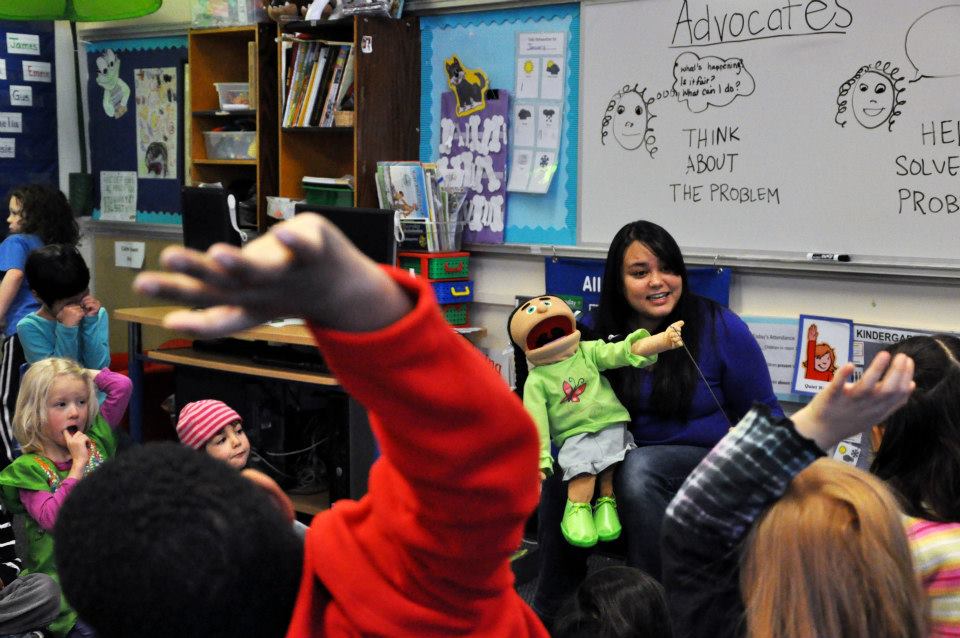
Jordan Taitingfong is Director of Equity at the EEU at the Haring Center and an educator whose work explores disability identity, interdependence, and belonging in early childhood. A former teacher of young children and now an educator of adults, she examines how schools shape children’s understandings of race, disability, and power from the earliest years. Grounded in Disability Justice and Oceanic perspectives, her work positions disability as culture, history, and collective inheritance.

Q: Can you describe your current role at the EEU and what your day-to-day work with teachers and staff looks like?

A: I am currently the Equity Director at the EEU, and my work focuses on our values around equity, inclusion, and community belonging and how those show up in everything we do.

I work with staff, especially teachers, on how those values are reflected in classroom practice. That includes professional development, reflecting on how our identities shape teaching, and thinking about how we support children in understanding their own identities. 

Sometimes that looks like formal professional development, and sometimes it’s working with teams to navigate complex moments with children or families. Much of my role is helping teachers reflect on what’s happening in their classrooms and across the school so we can better support kids and families. 

I’ve been at the EEU for more than twenty years. I started here as an undergraduate and have held many roles. I taught for ten years, and before that I was an instructional assistant and a graduate student. I also worked as a coach in the Professional Development Unit. 

Those experiences, from working directly with kids and families to supporting teachers, now inform how I help guide the school’s work around equity and belonging.

Q: What first drew you to equity and inclusion work in early childhood spaces?

A: My own experience as a child definitely had an impact on my understanding of race and racism in schools.

jordan teaching with crayons

I grew up going to a Department of Defense school for elementary school, which was really diverse. Then in middle school we moved to northern Washington, where I was the only kid of color in my school. I had a lot of experiences with racism from the kids, the community, and also from my teachers.

Later I became a teacher myself. As I continued to work in classrooms and think about those experiences, I started thinking more about how important it is to talk with kids about race in positive ways, especially for kids of color, so they can build a strong and protective sense of identity.

I also started seeing similar patterns around disability while working in inclusive classrooms. I was especially thinking about kids who live at that intersection, children who both have a disability and are kids of color. I saw how differently they were experiencing the system, and how families were trying to support their children while navigating that.

For example, the same diagnosis for a white child and a Black child could lead to very different outcomes in terms of resources or recommendations. Seeing that made me want to learn more about what was happening at the systems level so I could try to make changes for kids and families.

I grew up on a Navy base in Rota, Spain. My dad was in the civil service, so I attended Department of Defense schools there through elementary school. Looking back now as an adult, I can see more clearly how disability and race were tied together in my own experience.

In that very racially diverse environment, I was considered a gifted student and was placed in gifted classes. But when we moved to northern Washington, there was suddenly a lot of conversation about me being behind or about my behavior. That shift happened at the same time I was experiencing a lot of racism. I didn’t understand it at the time, but now I can see how connected those experiences were.

Q: Can you share a moment, story, or example that captures why this work matters to you?

jordan at white board

A: A story that I share a lot really shows how important it is for adults to set, teach, and practice the values we want to see in a classroom. When we do that well, kids take those ideas and run with them in ways we couldn’t come up with ourselves.

When I was teaching kindergarten, I had a set of twins in my class. One of them had a disability and was non-speaking and was just starting to learn how to use AAC (Augmentative and Alternative Communication). She loved to stim. She loved watching water, dropping toys, and listening to things fall.

We were really struggling with the idea that she needed to play like the other kids. During free choice time, we kept trying to figure out how to include her in the same kinds of play as everyone else, even though that wasn’t what she wanted to do with her time.

Throughout the year we worked really hard talking with the class about how everyone belonged in our classroom. Everyone was meant to be there. Everyone should be playing together. Leaving kids out was not okay, and being welcoming and kind was really important.

One day a little boy came up to me and said she was taking all the marbles from their game and dropping them. He wanted me to solve the problem. I said, “It sounds like she really loves playing with them.” He looked at me and walked away.

About ten minutes later we looked over and the kids had built a marble maze. They had set it up, on their own, and her job was to drop the marbles into the maze.

In that moment they created something so much better than what we had been trying to do as adults. She was legitimately enjoying herself and playing. It wasn’t something we were trying to force.

They figured it out. Our job was to teach them that everyone can play together and that it’s their job to get creative about it.

jordan teaching on the floor

“Our job was to teach them that everyone can play together and that it’s their job to get creative about it.”

That’s a story I share a lot because I want teachers to think about how they model those values for kids. We want children to leave school with the skills to build belonging wherever they go.

Q: You shared that your talk will explore what it means for children to arrive in early childhood spaces already whole. Can you say more about what you mean by that?

Especially in early childhood, there’s this assumption that adults are shaping kids so they’re ready for school. We talk a lot about being school ready or kindergarten ready.

But when I was a kindergarten teacher, I always felt like if you’re in kindergarten, you’re kindergarten ready. You don’t have to be performing in a certain way or be at a certain level to belong there.

“If you’re in kindergarten, you’re kindergarten ready.

This becomes really important when we’re thinking about disability. We do kids a disservice when we start from the idea that they’re not ready, or that something about them needs to be fixed or remediated.

When I think about wholeness it’s connected to ideas of readiness, I want to push back on that framing because all kids come with identities they just haven’t explored yet, and those identities often get overshadowed by how we evaluate their performance.

We also don’t do a great job, especially for kids with disabilities, of teaching them about their identity. We don’t teach them about disability history or the many people who have existed across time with disabilities who mattered like they do.

If we think about kids as showing up with those histories and with the right to participate simply because they are there, then we’re thinking about them in more whole ways. I don’t want kids to feel like they have to leave a part of themselves behind to be in a classroom and I don’t want teachers thinking that they’re only job is to get kids ready or work on the ways they aren’t ready, I want them to see they’re already whole when they come into a classroom.

Q: How do Oceanic perspectives and disability justice frameworks shape your approach to this topic?

A: I think a lot about Oceanic perspectives and disability justice perspectives together, especially around the importance of interdependence.

Disability justice really emphasizes the value of all bodies and all minds and the idea that we depend on each other. Oceanic perspectives also focus on relationality and collective responsibility.

When I think about those things together, it opens up different ways of thinking about what children need and what classroom communities can look like.

For example, when I was a teacher we were always told that if we wrote an IEP goal, it needed to be written toward independence. The end goal was that the child could do something independently.

But that’s not necessarily the best goal for all kids or all ways of being.

If we think more about interdependence, we can expand how we organize classrooms and how kids learn from each other. A classroom is already a community. There are enough people there to support participation.

That perspective allows us to think differently about what learning and belonging can look like.

Q: What do you hope educators, students, and community members walk away thinking or doing differently after attending your talk?

I think for people who have never thought about disability as an identity, I hope they begin to explore that idea. Disability has a culture and a really powerful community. Disabled kids have the right to be part of that.

For teachers, I hope they walk away thinking creatively about their classrooms and recognizing that it’s all of our responsibility to build spaces where everyone belongs.

We also have such a wide variety of people who come through the EEU. Undergraduates, graduate students, researchers, families. Many of them go on to become doctors or teachers or leaders in other fields.

Working in a place where belonging is central has a really big impact on people.

Q: What gives you hope when you think about the future of early childhood education and inclusion?

A: What gives me hope is that people are still doing this work in meaningful ways at a time when it isn’t always popular and when people can feel scared to talk about things like belonging, inclusion, race, and disability.

It gives me hope that our staff aren’t afraid of those conversations. They are still teaching kids about these ideas because it is so important.

Kids need to learn how to be proud of themselves and proud of each other, and how to protect each other in the world we live in.

There are still so many people doing this work and still so many people teaching kids about belonging and inclusion. That commitment gives me hope. 

jordan holding storybook


Q&A with Laura Areiza, Education Specialist, Haring Center for Inclusive Education 

Education specialist Laura Areiza shares how land, language, and family shape her work in inclusive education and her hopes for strengthening belonging for multilingual learners. Read her Q&A below.

To start, can you tell us a bit about yourself and what inspired you to pursue a career in inclusive education? 

laura areiza
Laura Areiza

My name is Laura, and my work is rooted in my experience growing up in a Native family in the Amazon region of Colombia, where oral tradition, community care, and learning from the land were part of everyday life. I have always understood education as something relational, something that happens in connection with others. 

Working with children and families, first in Colombia and now in Seattle, showed me how much belonging matters. Silvia Rivera Cusicanqui reminds us that “there is no decolonization without listening to the stories of the people,” and that has guided me in my academic work. When I came to the U.S., I realized how many Latino and Indigenous families were navigating systems where their languages and ways of raising children were not always understood. That inspired me to dedicate myself to inclusive education, spaces where every child’s identity is honored, and families feel truly seen. 

“When a child hears their home language in the classroom, even a single word, their whole-body shifts. They feel recognized. That sense of belonging is at the center of my approach.”

You have done research on Indigenous storytelling and language revitalization. How do those traditions shape your approach to inclusion? 

laura areiza

Native storytelling teaches us that knowledge is shared through relationships, memory, and land, not just through written text. My favorite Maya poet, Humberto Ak’ab’al, said, “My language is the land where my words were born,” and I carry that in my work. When I work with educators, I try to bring that same spirit: to listen deeply, to honor the stories children carry, and to create space for families to share their own knowledge. 

Language revitalization also reminds me that inclusion is not only about access; it is about dignity and human rights. When a child hears their home language in the classroom, even a single word, their whole body shifts. They feel recognized. That sense of belonging is at the center of my approach. 

How has your journey, from your work with children and families in Colombia to your current role in Seattle, shaped the way you think about language, culture, and belonging? 

Moving between countries and cultures helped me understand the emotional weight of language. In Colombia, I taught children and adults in communities where Spanish is mixed with Indigenous languages. Here in Seattle, I see that same diversity, but sometimes families feel pressure to leave their language and culture behind. 

In this respect, the educator who develops the evolved curriculum, Narcy Navaez, says, “Language and culture is medicine,” and my own journey taught me that belonging is not something you give to families. It is something you, as an educator, build with them. It means recognizing the strength of multilingualism, the history behind each family’s story, and the right of every child must show up fully as themselves. 

You have supported many educators in adapting curriculum for bilingual and multicultural classrooms. What advice would you give to educators who want to make their classrooms more inclusive for multilingual learners? 

Start with what children already know. Families hold so much knowledge, so invite them in. Use visuals, gestures, routines, and materials from everyday life. Keep language simple but meaningful, and let children move between languages without fear. 

I like the idea Silvia Rivera Cusicanqui shares with us from Bolivia: “knowledge grows when worlds meet.” Most of all, remember that multilingual learners are not behind. They are expanding their world. Inclusion means giving them time, honoring their identity, and creating predictable environments where they can participate with confidence. Also, our children bring us the unique opportunity to learn different languages that are spoken in Seattle, and we should take advantage of that. Learning a different language has so many benefits for our health and society.  

What are some ways you bring oral traditions and traditional knowledge into your work with children, families, or professional development? 

Sometimes it starts with a song from my language, or a simple story about the forest, or a teaching from my grandma about plants. During our trainings, I invite educators to think of their own family stories, recipes, celebrations, or words from childhood, and to see those as part of a collective curriculum. We include land acknowledgement in different native perspectives on the world, including visuals, lullabies, arts, and customs. With children, I use nature walks, storytelling circles, call-and-response songs, and opportunities for them to narrate what they see and feel.  

How do you hope the Haring Center continues to bring language and cultural identity into the inclusion conversation? 

I hope we continue to center families’ voices, especially families who speak languages other than English and families whose stories have been historically and systematically ignored or segregated. The Haring Center of Inclusion has a beautiful opportunity to show that inclusion is not only about disability services; it is also about cultural safety, linguistic rights, and identity. 

I would love to see more trainings in Spanish virtually and in person, more collaborations with community-based organizations, and more visibility for Indigenous and immigrant knowledge in our professional development. We build from down to up, and that means starting with a community of practice. 

Finally, what gives you hope about the future of inclusive education? 

What gives me hope is seeing children who are proud of who they are, and educators who want to learn how to honor that. I see families reclaiming their languages, providers advocating for their communities, and young children teaching each other kindness across cultures. 

I believe that when we center identity, land, and family in early childhood, we build a future where inclusion is not a program or a checklist. We say in my culture, “We build until we make it happen from the sunset through the sunrise. We make the inclusion dawn”, something we plant together and nurture with care. 

Huskies at play, hearts at work

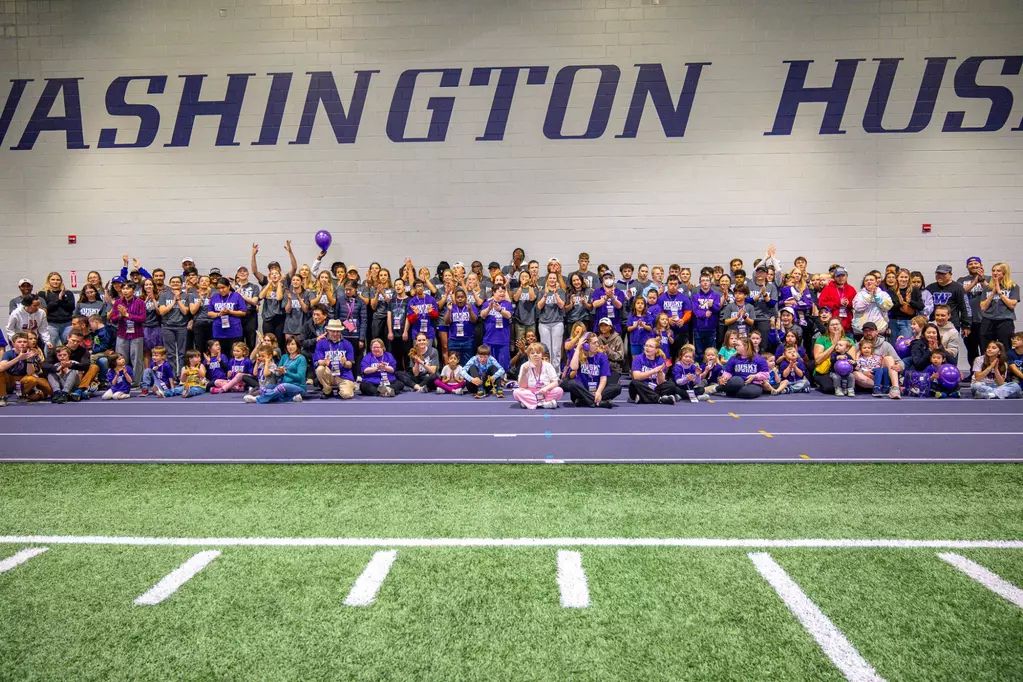
When UW Athletics reached out to the Haring Center’s Experimental Education Unit (EEU), they weren’t just offering volunteers, they were planting the seeds of a powerful partnership. What began with student-athletes showing up to play has grown into a deeply meaningful collaboration built on shared joy, belonging and the belief that all children deserve to thrive.

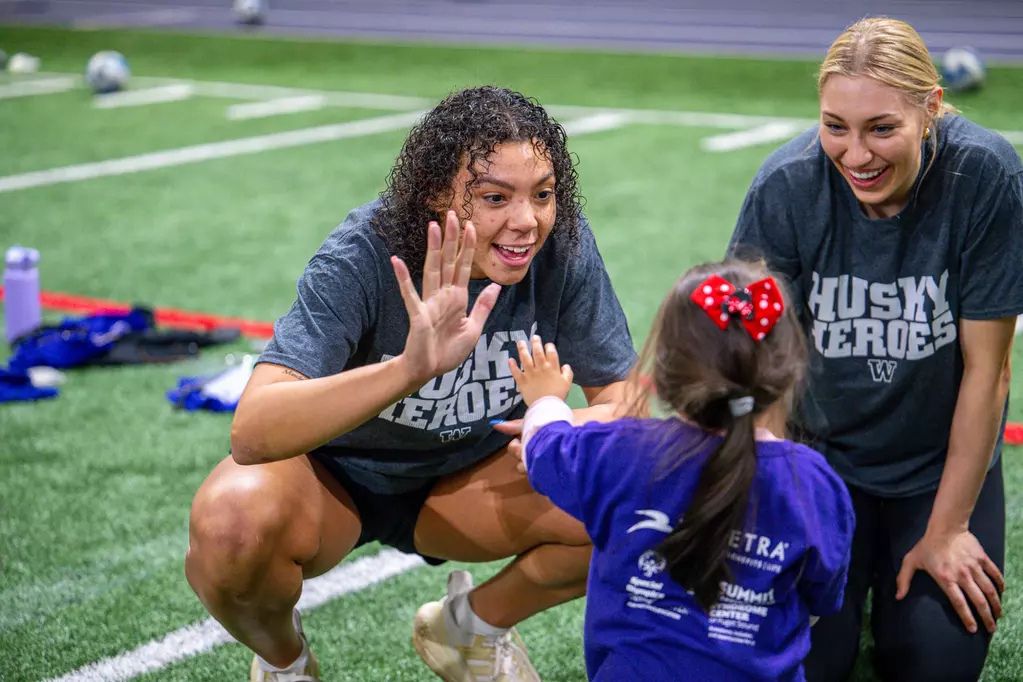
Husky hereoes, girls high fiving

Through this partnership, UW student-athletes are helping to reimagine what community, connection, and inclusion can look like, one playful moment at a time.

This isn’t a new initiative. As Lana Sumner, assistant principal at the Haring Center, shared, “Since I’ve been here, it’s been happening all quarters.” Student-athletes from a range of sports — football, men’s and women’s soccer, softball, and gymnastics — regularly visit EEU students during recess and playtime, bringing joy and curiosity to a learning environment that centers children with and without disabilities. “They just have somebody to play with,” Sumner explained. “It’s wonderful. Teachers can step back and observe how the kids interact with others and how that play is extended.”

These simple playground moments are building bridges. “It just helps to build a greater community,” Sumner said. “We’re in our little bubble here in our school, but it gets us to know other people on campus.” Coaches and athletes often express how “cute” and “fun” the visits are, and for the kids, the excitement is palpable. “The little kids get excited when there’s that recognition that, oh, the athletes are here.”

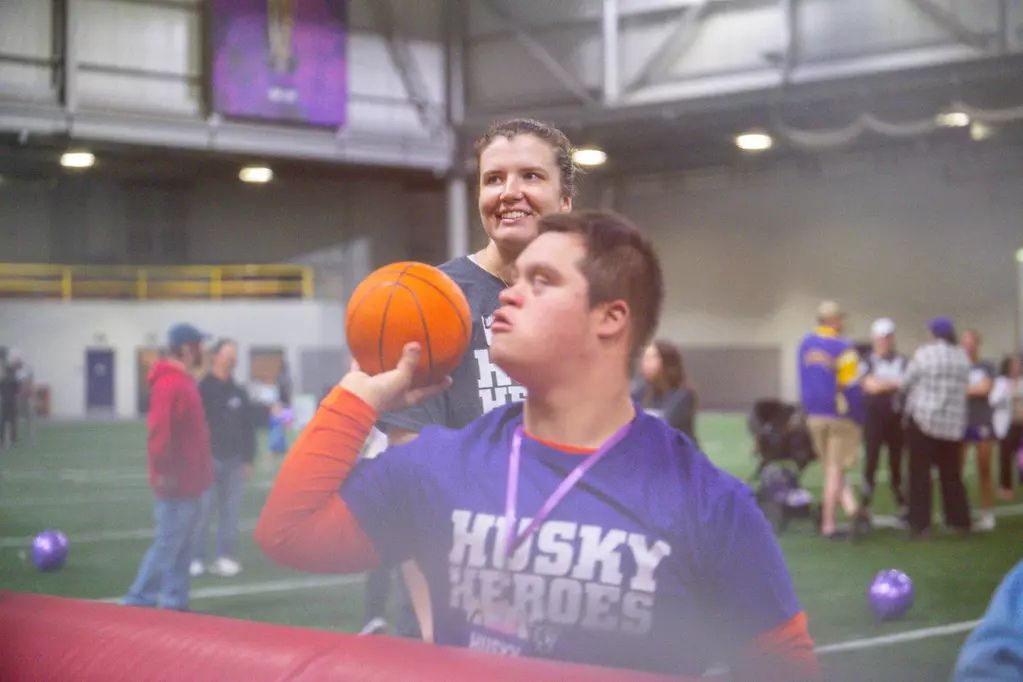
Husky Heroes, shooting basketball

At the heart of this partnership is an inclusive philosophy: all children, regardless of ability, deserve opportunities to learn, play and grow. “I hope that [the student-athletes] understand inclusive education settings better,” Sumner said, “and see that all people of all abilities can learn and play and grow and have fun together.”

That spirit of inclusive joy took center stage during Husky Heroes, a new community event launched by Philip Carpio, assistant director for diversity, equity, and inclusion in UW Athletics. Husky Heroes invites children and adults with disabilities to experience Husky athletics in a way designed just for them.
Caprio was inspired by his own family. “I have a nephew who is autistic, he requires a lot of assistance. He’s nonverbal,” Carpio shared. “I wanted to create an event that allowed kids and adults to be able to experience like Husky athletics in a way that worked for them.”

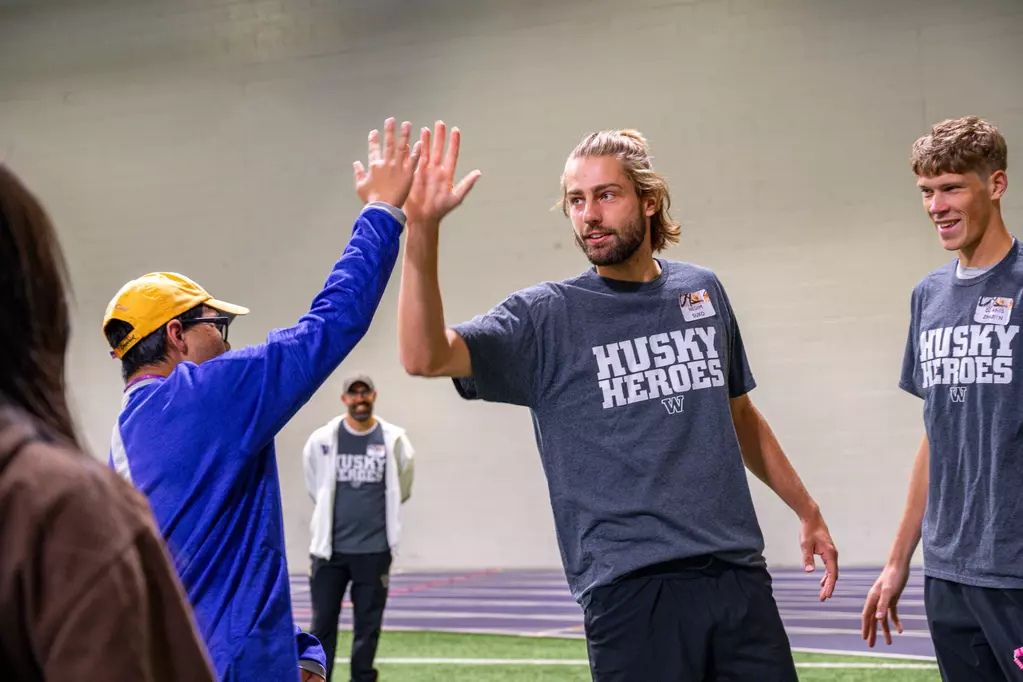
Husky heroes, high five

The result was a vibrant, accessible celebration. “It’s a carnival-style field day,” Caprio described. “We had the noise canceling headphones, sensory bags, giveaways, all the stations were adaptable.” The event was hosted free of charge, thanks to support from Symetra, and included snacks, games, and more than 60 student-athlete volunteers. “We wanted to make sure that we literally just had something for everybody.”

But the event’s impact rippled far beyond the day itself.
“Our student-athletes absolutely loved the event,” Carpio said. “It allowed them to create a little bit of a community amongst themselves, but the sole focus was the kids.” For Carpio it’s about reminding everyone — athletes, children, families — that “sport is truly for everybody.” And that “they still want to be them, and they can be them. It just may look a little bit different.”

Parents were moved. “We definitely had several parents that were literally like in tears,” Carpio recalled. “They’ve never been provided the event at no cost, we were doing it for the community, for no other reason than we wanted to do it.”

This commitment has deep roots. For Carpio, who is Hispanic and queer, the work of inclusion is personal. “If I want people to stand up and fight for my identities, I have to be willing to do the same. We can’t let hate win,” he said. “We have to show love and empathy for each other.”

And thanks to this work, that love is showing up, in small hands reaching for hula hoops, in giant athletes crouching at eye level, in spontaneous games of tag, and in the shared laughter echoing off a playground surrounded by glass.

As Carpio ssput it: “We have 570 student-athletes that are trying to navigate this world as young adults, and we have to be the example.”

Thanks to this partnership, they already are.

Husky Heroes, group shot

Student spotlight with Chi Baik

Chi Baik is a fourth-year doctoral candidate in Special Education at UW whose work focuses on early communication for children with cognitive disabilities and inclusive teaching practices. She coordinates community programs through the Haring Center in partnership with Open Doors for Multicultural Families. Read her Q&A below to learn more about her!

Chi Baik
Chi Baik

Can you tell us a bit about yourself and what you’re focusing on in your doctoral studies? What inspired you to pursue this path?

My name is Chi Baik and I am entering my 4th year here at UW! I am a doctoral candidate studying Special Education and I’m working on my dissertation this year. I am originally from Seoul, South Korea but immigrated to the US when I was 4. I grew up in Silver Spring, MD which is right outside of Washington D.C.! Prior to moving to Seattle for school, I was a preschool special education teacher supporting young children with extensive support needs.

Through my own professional experiences, I became passionate about providing high-quality early support for children with significant cognitive disabilities. In particular, my research focuses on improving communication outcomes for young children who do not yet have access to systematic forms of communication. I am also interested in the impact of teachers’ perceptions of disability on teaching and inclusionary practices.

How did you get involved with the Haring Center, and what has your role been in the collaboration with Open Doors for Multicultural Families (ODMF)?

My advisor, Dr. Angel Fettig, is the director of research at the Haring Center! Through her, I’ve become more involved in research and partnership efforts with the community. Specifically, our lab has collaborated with ODMF (https://opendoorswa.org/), an organization that supports multicultural students and their families in navigating special education services.

Our role in that support has mainly been to provide children and families with opportunities to attend early learning playgroups and parent education seminars! UW students plan and lead these sessions and it has been an awesome way to collaborate and connect with students and families in our community. My role is to coordinate these efforts with ODMF as well as assist in planning/leading sessions.

What does a typical day look like for you coordinating the lab efforts with ODMF, and what kinds of work or support do you provide to families?

My day-to-day work with ODMF can look very different! My main responsibility is to make sure everything is planned and ready so that things run smoothly. This generally just means a lot of email correspondence. In collaboration with UW, we run monthly playgroups and parent trainings. Our playgroups are planned and led by a group of our Master’s students who study either Special Education or Speech-Language Pathology. These playgroups have a different, culturally-relevant theme for families each month.

For example, some of our themes this past year were: Indigenous Heritage Month, Eid and Ramadan, Cinco de Mayo, and Lunar New Year. The goal of these playgroups is to encourage and support parent-child interactions for children with disabilities. Students create lessons plans (which I’ll review and coordinate materials for) and implement them once a month in 3-hour sessions.

For our parent trainings, our doctoral students in Dr. Fettig’s lab, who are all studying Special Education, plan and lead sessions. Session topics are decided in collaboration with ODMF and reflect families’ interests. Some of our topics last year were: Disability Resources/Advocacy, Child Development/Social Skills, Therapies and Related Services, and Challenging Behaviors.

Students create about an hour-long presentation with relevant resources and then have time for a Q&A from families. These sessions are delivered online once a month and, in the evenings, to be flexible and meet families’ needs.

Through your work with ODMF and the families they serve, what have been some of the most meaningful experiences or lessons you’ve taken away?

As a child who grew up in a low-income, immigrant family whose parents were not proficient in English and did not know how to navigate school systems, I understand the impact of the work that ODMF does on a personal level. I am so happy to see that there are organizations like ODMF who are dedicated to supporting families like mine and even happier that I get to support them in their work.

I would say that my most meaningful experiences have been in seeing the relationships between children, families, UW students, and ODMF staff grow throughout our partnerships together. We often see the same children and families attend our playgroups and parent trainings and it’s wonderful to get to know each other not just on a professional level, but on a more personal level as well.

Outside of your research and work, what do you enjoy doing in your free time?

In my free time, you can catch me at a lot of different concerts because I love live music! I also love enjoying the beautiful weather in Seattle and am usually lounging on the beaches in the summer. When I’m inside, I spend a lot of time doing puzzles, solving crosswords/sudoku, or building legos.

Where kids thrive

On any given morning, at the Haring Center’s Experimental Education Unit (EEU) at the University of Washington (UW), you might see what Lia Soneson describes: “a group of boisterous, happy kids with a huge range of needs and abilities and all the teachers working together seamlessly integrating learning, fun and exploration throughout.” 

Indeed, you might see a speech therapist kneeling beside a child at the sensory table, a teacher adapting a lesson in real-time for three different learning styles, and a group of kindergarteners laughing together at story time. Some using words, others gestures, all equally engaged. This is where education stops being about fitting children into systems and starts being about building systems around children. 

The Soneson Family. Left to right: Lia, Svea, Björn and Olin.

For Lia and her daughter Svea, diagnosed with Potocki-Lupski Syndrome (PTLS), the path to the EEU was paved by years of collaborative care. “With new diagnoses every few months and major medical hurdles, we had to become experts on Svea when no doctors were. The therapists at Boyer Clinic, our incredible pediatrician, and specialists at Seattle Children’s helped us tackle each challenge one day at a time.” 

When they toured the EEU, Lia felt the culmination of that support network expanding. “[My husband and I] both had tears in our eyes seeing how supportive and caring the environment was. Every single person we talked to and saw interacting with the kids was patient, kind and so supportive.” At the EEU, Svea found not just another program, but a community that deepened what her therapies had built. 

A philosophy of flexibility 

This commitment to meeting children where they are doesn’t just exist in theory at the EEU, it’s lived daily by educators like Pete Hoff (MEd, ’16, Early Childhood Special Education). A veteran kindergarten teacher, Pete embodies the program’s core belief: “We never have to say, ‘We can’t support this child.’”

He shares a story about a student who delighted in flicking the classroom lights on and off, a moment that, to some, might seem like a mere distraction. But Pete and his team chose to look deeper. They saw a spark of curiosity, a child exploring their environment in a way that felt meaningful to them. Rather than redirecting the behavior, they embraced it with empathy and creativity, weaving it into the classroom routine by inviting the student to be in charge of the lights during transitions. This simple shift sent a powerful message: you belong here, just as you are.

This is how every lesson unfolds at the EEU — with flexibility. In a single morning circle, one child may sing along, another points to pictures to communicate, while a third takes breaks when needed. Each child is engaging with the same concepts in the way that suits them best. Teachers move with quiet intention, seamlessly adapting materials, shifting activities and celebrating every form of participation. There’s no single “right” way to engage, only the deeply held belief that when we honor how children naturally learn, real growth follows. 

The impact is tangible. Lia has watched Svea blossom. “She has grown so much this year, and is really comprehending so much more,” she says. She recalls a moment early in the school year: “One of the first few weeks of school, I popped into the observation room… Teacher Pete came over and put his hands low to the ground and said, ‘it’s time to wash your hands, Svea!’ Then he just waited with his hands down there for about 10 seconds… Seeing the kindness and patience of that moment made me immediately start crying.”

Evidence in action

The kind of inclusion families like Lia’s experience at the EEU didn’t happen by accident. It’s built on decades of research and innovation from the Haring Center. Since the 1970s, researchers there have been asking bold questions and developing some of the most trusted approaches in special education. From teaching children with Down syndrome to read when few believed it was possible, to creating Project DATA — an inclusive, school-based model for young children with autism — their work has consistently reshaped what education can look like. Tools like the Building Blocks framework have given teachers across the country practical ways to adapt classrooms so that every child can learn and participate fully. 

At the EEU, that research comes to life in everyday moments, particularly in classrooms where flexibility is the norm and every child is seen as capable. As Principal Chris Matsumoto explains, “Creating a community where everyone is valued and there is a true sense of belonging requires a commitment to inclusion and equity from staff, families and children. It is the commitment, passion and hope of the community that makes inclusion possible at the EEU and beyond.”

EEU student Svea playing.

Indeed, that sense of belonging is something Lia sees in her daughter every day. Svea lights up when the bus arrives in the morning, and comes home eager to share her world. “When we got the school photo, she spent so long looking at everyone, pointing them all out, trying to say their names. I think she loves observing her peers, and she learns from each of them,” Lia says. These connections don’t just happen; they’re made possible by a classroom designed to welcome and celebrate each child. As Teacher Pete puts it, “Everyone, no matter how they participate, is a valued part of our classroom community.”

Redefining what’s possible

As Svea prepares to transition to a new school, Lia reflects on how meaningful this year has been for their family. “We wish the EEU went through grade five, but are thankful to have had one year,” she says. “The sense of security, support, inclusion and care Svea feels at the EEU is a great foundation that we hope she carries with her into elementary school and beyond.”

Pete sees this transition as part of their mission: “As a training site for future teachers, the EEU’s role is to model radical flexibility and openness to change.” His hope mirrors Lia’s: that inclusive practices will spread, so all children can experience what Svea has at the EEU, a place where, in Pete’s words, “every child deserves to be fully seen, supported and celebrated.” 

Svea with her brother Olin.

For Lia, the lessons extend beyond the classroom. She often speaks of her gratitude for the teachers, the team and the care her daughter receives. Lia expresses appreciation for Raquel, the compassionate bus driver who has stopped the bus multiple times to ensure Svea’s safety that she isn’t having a seizure, and for Nurse Susan, whose unwavering support has been invaluable as they navigate Svea’s various food allergies. Watching the patient, responsive way educators interact with Svea has even influenced how she parents, inspiring more patience and compassion in her own daily life.

And perhaps that’s the EEU’s most powerful contribution: not just in how it teaches children, but in how it challenges adults to rethink what education can be. It’s a place where difference is expected, not accommodated, where students don’t merely join a classroom community but help shape it. 

In doing so, they offer a blueprint for what all schools might become, reshaping our understanding of ability itself. In a world that too often views disability through a lens of limitation, this small school on the UW campus reminds us that difference isn’t a deficit — it’s a reflection of humanity. And with the right support, every child can thrive.

Contact:

Vanessa Stone, stonevm@uw.edu

Assistant Director of marketing and communications, College of Education

2025 Haring Center Auction: Camp Inclusion – Recap

The end of Camp Inclusion is bittersweet—but our hearts are full.

Something powerful happened under the tent on Saturday, May 10th, 2025. Our community came together—not just to raise their paddles, but to raise their voices for a vision of the world where every child belongs.

We had set an ambitious goal: to raise $775,000 to support inclusive education at the Haring Center and beyond. Together, you helped us raise over $1,025,000.

That’s more than a number—it’s a resounding affirmation of our shared values.

Haring Center Director, Dr. Kathleen Artman Meeker opened the night with a message we all felt deeply:

“At the Haring Center, inclusion means everyone belongs and that everyone gets what they need. Equity means we value one another and we show it. We fight unfairness together and we take care of one another. We believe that diversity of thought, background, and ability helps us learn and makes us stronger, and accessibility doesn’t just help some, it makes the world better for everyone. These beliefs have shaped our work for decades, but right now they’re being tested. Across the country, we’re seeing threats to inclusive education. Debates and decisions that question whether every child truly does belong.”

She reaffirmed the Haring Center’s commitment to our vision and values, and told our community, “Your presence here, your support, your belief in this work is powerful. And it’s joyful. And it builds a better future for all children.”

Highlights from the evening

Champion for Inclusion: Dr. Ilene Schwartz (Shelter Films) | Watch here

Photos from the Event (Captured by Dougal Brownlie) | View gallery

Remarks from Haring Center Director, Dr. Kathleen Artman Meeker | Watch here

Katrina Davis’ Powerful Story About Her Son, Arthur | Watch here


Thank you for being part of our community!

Special thanks to the 2025 Haring Center Auction Co-chairs: Lissa Dickenson and Ann Pedack

2025 Haring Center Auction: Remarks from Dr. Kathleen Artman Meeker

Welcome to the 24th Annual Haring Center Auction!

This year’s theme is “Camp Inclusion” — a celebration of our community’s active commitment to ensuring that every child has the opportunity to learn, play, and grow alongside their peers, both at the Haring Center for Inclusive Education and beyond.

Thank you for being here and for supporting inclusive education. We’re so glad to have you with us tonight!

2025 Champion for Inclusion: Dr. Ilene Schwartz

Join us in celebrating Dr. Ilene Schwartz, a visionary leader whose work has shaped the field of inclusive education and transformed the lives of countless children and families. This heartfelt tribute honors her legacy and introduces the Dr. Ilene Schwartz Endowed Directorship—ensuring her impact continues for generations.

Thank you to Shelter Films, https://www.shelterfilms.org/, for their videography.