Doctoral candidate and Haring Center Scholarship Fellow Yuanchen Kuo is reshaping how researchers and practitioners think about supporting autistic children by starting with their families
Classroom experience, curiosity and a deep conviction that support should never stop at the school door—that is how Yuanchen Kuo, a recent doctoral graduate in Special Education at the University of Washington (UW) College of Education, is building a research career rooted in family partnership.
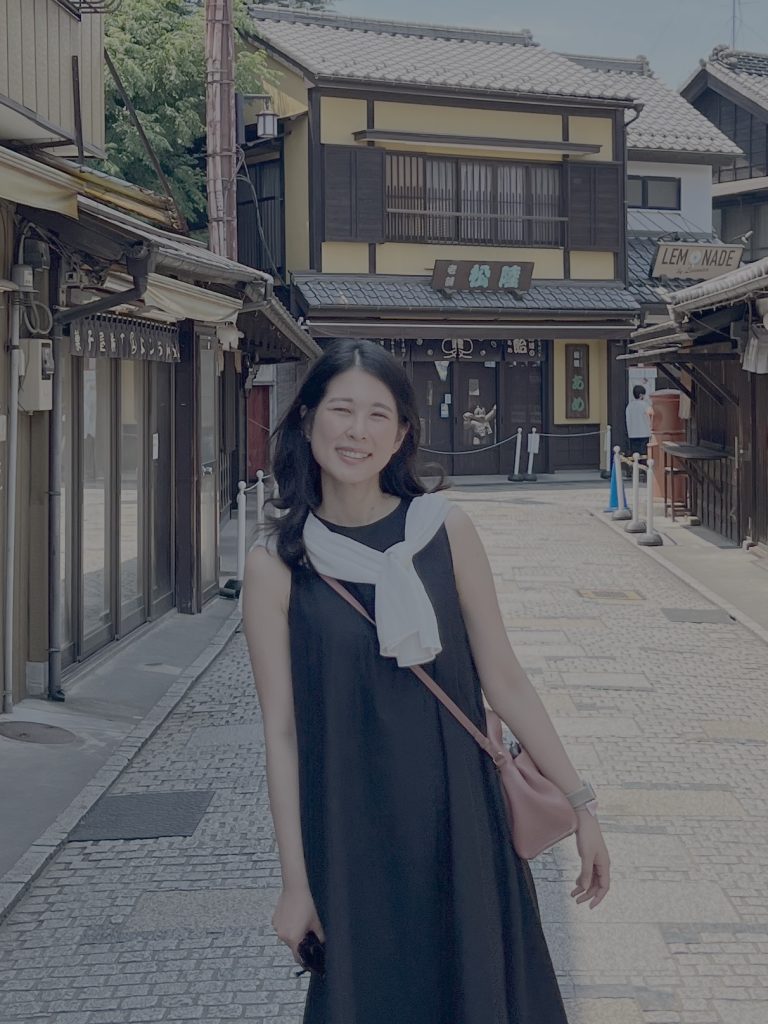
As a Haring Center Scholarship Fellow and under the mentorship of Dr. Angel Fettig (Director of Research at the Haring Center and a Professor in Early Childhood Special Education), Kuo has carved out a research focus that focuses on family quality of life.
“Researchers and practitioners often focus a lot on autistic children only,” she says, “and forgot the parent part, or forgot their families. But if we wanted to meaningfully support autistic children, we also need to support their family members, because they spend most of the time with their parents, with their grandparents, not just in schools.”
Kuo’s path to the UW winds through two continents and a formative five years in the classroom. Before pursuing her doctorate, she worked as a special education teacher in Taiwan, helping autistic students build social skills and teaching general education teachers to use evidence-based strategies, from adding visual cues in classrooms to embedding communication boards that gave students the tools to express their needs. Those years in practice sharpened a question she couldn’t let go of: what more could be done?
“I wanted to learn more about the evidence-based strategies,” she says. That drive took her to the University of Texas at Austin, where she studied applied behavioral analysis (ABA), before she arrived at UW to pursue her doctorate and dig deeper into the literature, and into the lives of the families she had come to care about.
At the UW, Kuo’s research has zeroed in on a gap she first noticed as a classroom teacher in Taiwan. When she would meet with parents to discuss their child’s behavior, they would inevitably share more than she had asked. They described the exhaustion of navigating waitlists for ABA services, the uncertainty of individualized education program (IEP) meetings, the weight of daily life with few reliable supports.
“I realized there are a lot of difficulties they face in their life, not just the challenging behaviors,” she says. “And if I wanted to support them, I need to help them with those difficulties as well.”
That insight became the foundation of the family quality of life support program she now runs. Unlike traditional parent training, which teaches caregivers specific behavior management strategies for specific routines, Kuo’s approach begins with a broader assessment of what families actually need.
Some parents want strategies for managing their child’s behavior at home. Others want to learn how to advocate for their child in IEP meetings, or how to navigate conversations with occupational therapists and speech-language pathologists, or simply where to find reliable services.
“I encourage them and empower them to let them know you have the right to share what you have observed at home, and what you want your child to learn,” Kuo says. “I can get the bigger picture of the family’s needs.”
The goal, she emphasizes, is sustainability, not just skills that fade after a program ends, but knowledge and confidence that families carry forward on their own. “I hope that after this parent training, they feel like, ‘I can do more by myself,'” she says.
The Haring Center Scholarship, part of a broader commitment to train the next generation of leaders in special education research, has made that vision concrete. Through the Haring Family Endowed Fellowship, which supports doctoral students’ studies and professional development, Kuo has been able to provide participation stipends to recruit families into her study, purchase materials like visual timers for use at home, and compensate additional caregivers—fathers, grandparents—whose perspectives enrich her research.
“I’m very, very grateful,” she says.
The fellowship’s reach extends beyond logistics. It has enabled Kuo to conduct meaningful follow-up interviews with participants, conversations where the real impact of her work comes into view.
In one such interview, a mother broke down in tears. A full-time caregiver, she had long blamed herself for not being able to fully support her child. After completing Kuo’s program, something had shifted.
“She finally knows she has a right to advocate for her child in school, or in any services,” Kuo recalls. “When she shared that she finally feels like she’s not a bad mom, she can do something for her child, that really touched me.”
It is the kind of transformation that, according to Kuo’s mentor Dr. Angel Fettig, speaks to something much larger than a single family and to the heart of what Kuo’s scholarship has set out to do.
“Yuanchen has made significant contributions through her work focused on improving family quality of life for families of autistic children receiving behavioral and educational services. Her scholarship emphasizes the importance of understanding family priorities, cultural and contextual factors, and the everyday experiences of caregivers when designing behavior support plans and intervention services. Through this work, she has helped advance more family-centered, collaborative, and socially meaningful approaches to supporting autistic children and their families, aligning closely with the Haring Center’s mission of promoting inclusion, partnership, and equitable support systems. It has been a joy working with Yuanchen and watching her scholarly growth the past 4 years. I am excited for her continued journey to contribute to the field to support children and families,” Dr. Fettig says.
Indeed, as she looks ahead, Kuo wants to turn her lens toward the practitioners themselves, the teachers and service providers who work alongside families every day.
“I’m not the only one who supports the parents,” she says. “I want to know more about the practitioner’s thoughts and perspectives, what barriers they face, and what support they need.”
Her goal is to eventually train practitioners to better support families from the inside out. For those who want to understand why her work matters, Kuo says, “Building a partnership with families is really powerful. Share that you care. Share your empathy. Even just listening, that can help a lot.”
It is, she says, what she has learned through every conversation, every follow-up interview, every family that has let her in.