Education specialist Laura Areiza shares how land, language, and family shape her work in inclusive education and her hopes for strengthening belonging for multilingual learners. Read her Q&A below.
To start, can you tell us a bit about yourself and what inspired you to pursue a career in inclusive education?
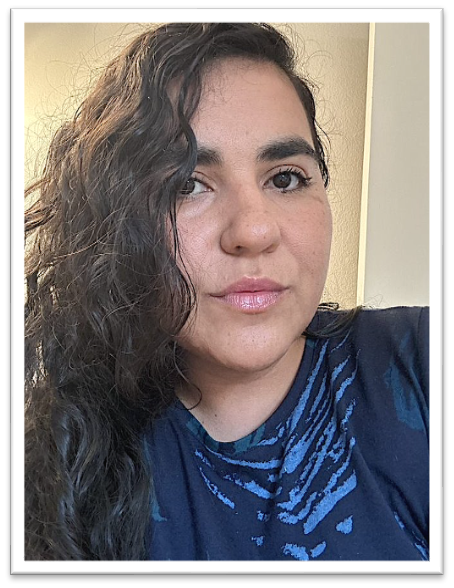
My name is Laura, and my work is rooted in my experience growing up in a Native family in the Amazon region of Colombia, where oral tradition, community care, and learning from the land were part of everyday life. I have always understood education as something relational, something that happens in connection with others.
Working with children and families, first in Colombia and now in Seattle, showed me how much belonging matters. Silvia Rivera Cusicanqui reminds us that “there is no decolonization without listening to the stories of the people,” and that has guided me in my academic work. When I came to the U.S., I realized how many Latino and Indigenous families were navigating systems where their languages and ways of raising children were not always understood. That inspired me to dedicate myself to inclusive education, spaces where every child’s identity is honored, and families feel truly seen.
“When a child hears their home language in the classroom, even a single word, their whole-body shifts. They feel recognized. That sense of belonging is at the center of my approach.”
You have done research on Indigenous storytelling and language revitalization. How do those traditions shape your approach to inclusion?

Native storytelling teaches us that knowledge is shared through relationships, memory, and land, not just through written text. My favorite Maya poet, Humberto Ak’ab’al, said, “My language is the land where my words were born,” and I carry that in my work. When I work with educators, I try to bring that same spirit: to listen deeply, to honor the stories children carry, and to create space for families to share their own knowledge.
Language revitalization also reminds me that inclusion is not only about access; it is about dignity and human rights. When a child hears their home language in the classroom, even a single word, their whole body shifts. They feel recognized. That sense of belonging is at the center of my approach.
How has your journey, from your work with children and families in Colombia to your current role in Seattle, shaped the way you think about language, culture, and belonging?
Moving between countries and cultures helped me understand the emotional weight of language. In Colombia, I taught children and adults in communities where Spanish is mixed with Indigenous languages. Here in Seattle, I see that same diversity, but sometimes families feel pressure to leave their language and culture behind.
In this respect, the educator who develops the evolved curriculum, Narcy Navaez, says, “Language and culture is medicine,” and my own journey taught me that belonging is not something you give to families. It is something you, as an educator, build with them. It means recognizing the strength of multilingualism, the history behind each family’s story, and the right of every child must show up fully as themselves.
You have supported many educators in adapting curriculum for bilingual and multicultural classrooms. What advice would you give to educators who want to make their classrooms more inclusive for multilingual learners?
Start with what children already know. Families hold so much knowledge, so invite them in. Use visuals, gestures, routines, and materials from everyday life. Keep language simple but meaningful, and let children move between languages without fear.
I like the idea Silvia Rivera Cusicanqui shares with us from Bolivia: “knowledge grows when worlds meet.” Most of all, remember that multilingual learners are not behind. They are expanding their world. Inclusion means giving them time, honoring their identity, and creating predictable environments where they can participate with confidence. Also, our children bring us the unique opportunity to learn different languages that are spoken in Seattle, and we should take advantage of that. Learning a different language has so many benefits for our health and society.
What are some ways you bring oral traditions and traditional knowledge into your work with children, families, or professional development?
Sometimes it starts with a song from my language, or a simple story about the forest, or a teaching from my grandma about plants. During our trainings, I invite educators to think of their own family stories, recipes, celebrations, or words from childhood, and to see those as part of a collective curriculum. We include land acknowledgement in different native perspectives on the world, including visuals, lullabies, arts, and customs. With children, I use nature walks, storytelling circles, call-and-response songs, and opportunities for them to narrate what they see and feel.
How do you hope the Haring Center continues to bring language and cultural identity into the inclusion conversation?
I hope we continue to center families’ voices, especially families who speak languages other than English and families whose stories have been historically and systematically ignored or segregated. The Haring Center of Inclusion has a beautiful opportunity to show that inclusion is not only about disability services; it is also about cultural safety, linguistic rights, and identity.
I would love to see more trainings in Spanish virtually and in person, more collaborations with community-based organizations, and more visibility for Indigenous and immigrant knowledge in our professional development. We build from down to up, and that means starting with a community of practice.
Finally, what gives you hope about the future of inclusive education?
What gives me hope is seeing children who are proud of who they are, and educators who want to learn how to honor that. I see families reclaiming their languages, providers advocating for their communities, and young children teaching each other kindness across cultures.
I believe that when we center identity, land, and family in early childhood, we build a future where inclusion is not a program or a checklist. We say in my culture, “We build until we make it happen from the sunset through the sunrise. We make the inclusion dawn”, something we plant together and nurture with care.