Listen to EEU and Project DATA Alum Alec Meden tell his story and experience with the Haring Center.
Year: 2019
2019 Haring Center Auction — Promo Video
The video was shown at the Haring Center Auction on May 11, 2019, chronicling the Song Family’s journey as members of the Haring Center community. This year’s theme was “Inclusion is My Superpower” to recognize the hero that lies within all of us.
The ‘Building Blocks’ of Inclusion
Popular text by University of Washington authors gets timely update

“What does it mean to provide specially designed instruction in an inclusive early childhood setting? What are evidence-based practices and how do they apply to young children with and without disabilities?” These are questions that Haring Center researchers and graduate students were asking in 2002 when the first edition of Building Blocks for Teaching Young Children with Special Needs was published.
Authored by Haring Center faculty Dr. Ilene Schwartz and Dr. Susan Sandall, the first and second editions of Building Blocks text became best-selling guides for early childhood educators who wanted to include every child in a meaningful way in their classrooms.
The original Building Blocks framework grew out of the work of the Early Childhood Research Institute on Inclusion (ECRII), a group of professionals from universities across the country who endeavored to identify both barriers to and supports of early childhood inclusion. This group worked together for more than 5 years to create a framework that could guide the work of teachers in a variety of early learning settings who wanted to help children with disabilities succeed in these classrooms. As Ilene Schwartz said “The purpose of the Building Blocks frameworks was to give teachers across all types of early learning environments (e.g., child care, preschool classrooms) effective strategies that would work for them in their classrooms, with their staff, and with their students.”
Through its first two editions, teacher trainees and practicing teachers alike have found Building Blocks to be a user-friendly guide that presents practical, evidence-based ideas to use across four key components: foundational practice, curriculum modifications, embedded learning opportunities, and child-focused instructional strategies.
Changes in the early learning landscape since the first two editions were published prompted the updates and additions to the third edition of Building Blocks. UW researchers Dr. Gail Joseph and Dr. Ariane Gauvreau joined Sandall and Schwartz as authors of the new edition, and have provided critical guidance for educators on a number of topics. In addition to expansions of the four key Building Blocks components, new topics include how to integrate literacy and STEAM content into daily activities, how to support the executive function skills of all young learners, how to integrate Universal Design for Learning (UDL) principles to engage all young children, and how to conduct quality classroom assessment to guide instruction.
The new edition of Building Blocks includes not only the traditional assessment, meeting, and planning forms included in previous editions, but also includes access to seven comprehensive training modules for staff development. The training modules are designed to reinforce key concepts in the book and each module includes a slide deck, presentation notes, learning activities, and lists of other resources and references.
According to Brookes Publishing Co., the third edition of Building Blocks has been highly anticipated. Since announcing the impending release of the new edition, Brookes received a huge number of pre-orders of the text and worked with 45 different universities who wished to adopt the Building Blocks text for their Fall 2019 and Spring 2020 teacher training courses.
Order the third edition of Building Blocks for Teaching Young Children with Special Needs. For training on the Building Blocks model in your school or center, contact Alison Winfield.
Flying High at the 2019 Haring Center Auction
Haring Center Supporters Made the 18th Annual Auction a Super Success

On May 11, the Haring Center community gathered once again to celebrate and support the power of inclusion at the 18th annual Haring Center Auction. Five hundred guests attended this year’s auction, which was themed ‘Inclusion is My Superpower’ to recognize the hero that lies within each of us. Together these inclusion superheroes raised a record $800,000 to support the classrooms of the Haring Center’s school, the Experimental Education Unit (EEU).
To kick off the auction program, Haring Center leadership recognized the Woodland Park Zoo as the 2019 ‘Champion for Inclusion’ for their commitment to establishing the zoo as a ‘Zoo of Inclusion’. As a beloved institution in the Seattle community, the zoo has instilled a love of animals and an appreciation for the natural world for generations of children and families. Now zoo leadership have created an ambitious strategic plan that values inclusion, community, education, and social change. When accepting the award on behalf of the zoo, Woodland Park Zoo President and CEO Alejandro Grajal said, “As an organization that has served our community for more than a century, it’s important to welcome everyone regardless of their abilities or needs. We need everyone’s voice.”
The evening also featured an inspirational talk by our featured speaker, Alec Meden, a graduate of the EEU school and Project DATA program. As part of his speech, Alec described the lasting impact that his early years at the EEU had on not only him, but his family. Alec said, “19 years later, I am still grateful for what I gained – and continue to gain – from being a part of the Haring Center community. Because of this place, I have had the good fortune to build lasting relationships with friends of different abilities… because even though we were all very different, we had common goals. My parents still have a relationship with Dr. Schwartz and the Haring Center. The Haring Center has a place in my life, in a very concrete way. And it always will.”
Through spirited bidding on unique items and generous ‘Fund the Future’ donations, Auction guests raised critical funding to keep the classrooms of the EEU school strong, secure, and prepared to serve as a ‘launch pad’ for widespread inclusive practices and a training ground for the educators of tomorrow. The generous support of our donors allows the EEU classrooms to thrive so that Haring Center faculty can continue to conduct classroom-based research and hands-on training that shape the future of inclusive education across the country.
For more information on the Haring Center Auction or to make a donation, contact Haring Center Stewardship and Events Manager Amy Thickpenny-Flinn.
Caring for Every Child

The Sunderlands were changed forever by the UW’s groundbreaking support for children with autism. Now they want to help other families access the same opportunities.
Haring Center trainers are working with the Woodland Park Zoo staff
to adopt inclusive practices into their day-to-day operations, making
zoo experiences more accessible to everyone.

“This is something that is valued at Woodland Park Zoo,” said Haring
Center Education Specialist Gina Dobberstein. “We are collaborating with
them to support their work, focusing on all that ways inclusive
practices can be implemented.”
Committed to creating more inclusive schools and communities, the
Haring Center works with a variety of organizations to support their use
of practices that support inclusion. While many professional
development partners are schools and educational organizations, Haring
Center trainers also work with community institutions such as the
Pacific Science Center, the King County Library System, and the Seattle
Opera.
“Community agencies see us as a resource being able to take best practices and model them for educator roles not related to the traditional school system,” said Dobberstein. “These partnerships have led to some exciting community collaborations and more opportunities for children of all abilities.”
Woodland Park Zoo’s work with the Haring Center is part of the zoo’s new strategic plan to envision a world where everyone lives sustainably with wildlife and their habitats. It is a top-down strategy that values inclusion, community, education, and social change. Haring Center Director Ilene Shwartz, Ph.D., meets monthly with the zoo board to discuss inclusive progress and goals.
To kick off work with the zoo, Haring Center trainers held a leadership summit to determine the many different opportunities the entire zoo staff has to be inclusive. The work group included zoo staff from People and Culture department, the interpretive services department, volunteer support staff, and lead volunteers. A goal of Woodland Park is to make the environment more accessible to volunteers with disabilities. Currently the zoo relies on roughly 700 total volunteers in a year. About 10 of those volunteers have a disability. The zoo would like to triple that number in the near future.
In their work with the Haring Center, zoo staff also identified how to make the environment more welcoming and accommodating to all guests, including making modifications to exhibits, signage, and landscape, as well as updating processes such as how staff and volunteers interact with animal trainers.
“The zoo is looking at both a little picture where their volunteers and zoo-goers to benefit from their inclusive training and a bigger picture of becoming a role model for the local and zoo communities,” said Dobberstein. “They want to be a leader in the field and that is exciting.”
The Haring Center is helping turn these goals into reality by training lead learning facilitators for inclusion at the zoo so the staff there can help spread inclusive practices throughout their organization. Haring Center trainers will hold another leadership summit with Woodland Park Zoo in the near future before designing specific trainings for staff. If you’d like to learn more about Haring Center professional development and training, please email Alison Winfield.
UW Applied Behavior Analysis Program Voted Best Online Format
Program Boasts High ABA Test Passage Rates

One tenant of the Haring Center’s mission is to train the next generation of educators in best practices. In the field of special education, Applied Behavior Analysis (ABA) is one of those best practices. The Haring Center provides training and continuing education in ABA practices through a number of professional development opportunities, including an award-winning online degree program.
Teachers looking to hone their skills in ABA need to look no further than the University of Washington College of Education to get a high quality education. With many courses taught by Haring Center faculty, the College’s online Applied Behavior Analysis degree program was recently recognized as one of the top online ABA programs in the county and was also awarded the “Best Online ABA Curriculum” by onlinemasters.com, a site dedicated to helping graduate students find the education they need to change the world.
“We make a dedicated effort to prepare competent, ethical,
and collaborative behavior analysts with this program,” said program director Nancy Rosenberg. “We want our graduates to work well with others, be adaptive, and we emphasize the use of their skills to improve the lives of those with disabilities.”
The program also posts a high pass rate for the national exam to become a board certified behavior analyst (BCBA): 81% of graduates in 2018 passed the test on their first attempt, compared to a national averagepass rate of 65%.
The online ABA program faculty have worked hard to provide a superb educational experience for students, through the coursework and facilitating collaboration between students.
“We’ve found that many models of online master’s programs are very isolating. Students go through the program on their own time and are not really involved with others,” said Rosenberg. “In our program, we are always looking for more ways to maximize student involvement and really create a cohort feel with all the students.”
In the UW ABA online program, there is a student digital hub where everyone can get together to discuss topics, post events on a shared calendar, and even join ‘coffee chats’ with the faculty over the internet.
The program’s classes are structured differently, too. Students and the professor come together for classes at a scheduled time, just as in in-person classes. Student interaction and participation is encouraged throughout classes, through small and large group discussions, polls, and other online technology tools.
“What I’ve found teaching these classes is that it’s not less interactive than in person, it’s just different,” said Rosenberg. “For example, it’s easier to get instantaneous responses from everybody in the class with online classes using polls and a chat feature. Not everybody can speak at once in an on campus class, but online, everybody can use a chat to respond.”
There are roughly 50 students in the two-year program. Students are able to pursue their ABA certification while earning their masters in special education, or just take the ABA coursework.
For more information about this program, email Nancy Rosenberg. For more information on other ABA training and continuing education opportunities, contact Alison Winfield.
A Zoo for Everyone
Haring Center Works with the Woodland Park Zoo to Help Them Become a ‘Zoo of Inclusion’
Haring Center trainers are working with the Woodland Park Zoo staff to adopt inclusive practices into their day-to-day operations, making zoo experiences more accessible to everyone.
“This is something that is valued at Woodland Park Zoo,” said Haring Center Education Specialist Gina Dobberstein. “We are collaborating with them to support their work, focusing on all that ways inclusive practices can be implemented.”
Committed to creating more inclusive schools and communities, the Haring Center works with a variety of organizations to support their use of practices that support inclusion. While many professional development partners are schools and educational organizations, Haring Center trainers also work with community institutions such as the Pacific Science Center, the King County Library System, and the Seattle Opera.
“Community agencies see us as a resource being able to take best practices and model them for educator roles not related to the traditional school system,” said Dobberstein. “These partnerships have led to some exciting community collaborations and more opportunities for children of all abilities.”
Woodland Park Zoo’s work with the Haring Center is part of the zoo’s new strategic plan to envision a world where everyone lives sustainably with wildlife and their habitats. It is a top-down strategy that values inclusion, community, education, and social change. Haring Center Director Ilene Schwartz, Ph.D., meets monthly with the zoo board to discuss inclusive progress and goals.
To kick off work with the zoo, Haring Center trainers held a leadership summit to determine the many different opportunities the entire zoo staff has to be inclusive. The work group included zoo staff from People and Culture department, the interpretive services department, volunteer support staff, and lead volunteers. A goal of Woodland Park is to make the environment more accessible to volunteers with disabilities. Currently the zoo relies on roughly 700 total volunteers in a year. About 10 of those volunteers have a disability. The zoo would like to triple that number in the near future.
In their work with the Haring Center, zoo staff also identified how to make the environment more welcoming and accommodating to all guests, including making modifications to exhibits, signage, and landscape, as well as updating processes such as how staff and volunteers interact with animal trainers.
“The zoo is looking at both a little picture where their volunteers and zoo-goers to benefit from their inclusive training and a bigger picture of becoming a role model for the local and zoo communities,” said Dobberstein. “They want to be a leader in the field and that is exciting.”
The Haring Center is helping turn these goals into reality by training lead learning facilitators for inclusion at the zoo so the staff there can help spread inclusive practices throughout their organization. Haring Center trainers will hold another leadership summit with Woodland Park Zoo in the near future before designing specific trainings for staff. If you’d like to learn more about Haring Center professional development and training, please email Alison Winfield.
Remembering Cecile Lindquist
It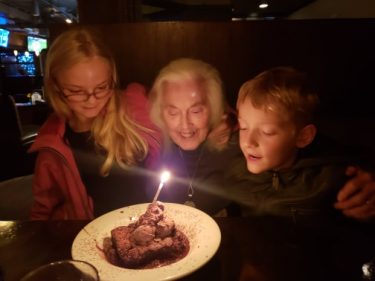 is with great sadness that we say ‘goodbye’ and ‘thank you’ to a Haring Center hero, Cecile Lindquist, who passed away on April 10th, 2019.
Cecile was a visionary and fierce advocate for individuals with special needs. Among her many great accomplishments in the areas of special education and early intervention, Cecile helped author and lobby to pass Washington’s House Bill 90 (HB 90), “Education for All”. When passed in 1971, HB 90 became the first law in the nation to mandate public education for children with disabilities. This law changed the lives of children across Washington, and established the foundation for a federal education law – the law that would eventually become the Individuals with Disabilities Education Act (IDEA).
Cecile worked at the Haring Center’s Experimental Education Unit (EEU) in admissions and community relations for more than 30 years. Her impact is lasting, and Cecile will continue to serve as an example of true advocacy and public service.
We owe so much to Cecile, and send our deepest condolences to her family and those who loved her.
On Working with Young Children with ASD and Complex Communication Needs
Haring Center Researcher Discusses Effective Strategies

Technology has helped further advance the field of early childhood education.
Haring Center researcher Ariane Gauvreau, Ph.D., BCBA-D recently spoke about the benefits and challenges of the use of technology to teach communication skills to children with Autism Spectrum Disorders (ASD). Haring Center researchers Ilene Schwartz, Ph D, BCBA-D Gauvreau and Katy Bateman, Ph.D., BCBA-D recently teamed up to contribute a chapter on the subject for a new text book titled Interventions for Individuals with Autism Spectrum Disorder and Complex Communication Needs.
“New technologie like tablets and smart phones are readily accessible and available, but we want to avoid giving any child a device with an app on it that will support communication and then have that kid sitting in a room by themselves, pressing a button for something they want without getting the attention of someone who can help them get it” she said.
Pre-verbal or non-verbal children can learn to communicate in different ways, through using gestures, electronic devices, or picture symbols. Progression through non-verbal skills and methods of communication may form the foundation needed for a child to communicate verbally down the road. However, there is more to learning communication skills than discovering the mechanism through which a child will communicate. In addition, children with autism often need individualized instruction to learn a communicative exchange, which is the act of initiating interaction with another person to meet their needs.
“One thing we wanted to highlight is that kids with autism often need some additional and unique support supplementing their communication due to the nature of autism,” Gauvreau said. “So we wanted to emphasize the importance of teaching the social communication aspect.”
While noting that apps can help children achieve communication milestones, the authors recommended the Picture Exchange Communication System (PECS) as a place to begin, then moving to a more high-tech device or tablet once the child has mastered this communication system. Communication using PECS involves a set of pictures that children select and exchange to communicate with others, embedding a communicative exchange in the process.
“The great thing about the PECS system is that it always involves another person,” she said. “You always have to go and get someone and make sure they are listening before you tell them what you want.”
The chapter further explores PECS and augmentative communication within inclusive settings, specifically in a study done at the Haring Center exploring PECS with peers where kids were successful in using the system to communicate with a friend.
A child’s vocabulary is also an element the authors noted as crucial to the successful use of communication systems such as PECS or apps. Gauvreau said that the vocabulary taught should meet the specific wants and needs of each child.
“Any child’s vocabulary within an app or PECS should be comprised of things they are interested in asking for and playing with – stuff that they like, things in their homes and communities. Not necessarily classroom materials. I see this in classrooms all over, where the picture symbols are of specific classroom activities or an art project. If I’m a kid who doesn’t like art or that activity, that symbol means nothing to me and I am probably not motivated to ask for it.”
If you’d like more information on this new chapter, email Ariane Gauvreau.